Most people reach for hand sanitizer. I did too, for years. But on jobs where the nearest spigot is around the side of the house, I learned something the hard way: sanitizer doesn't clean dirty hands. It sits on top of the grime.
That's the real story behind waterless soap vs hand sanitizer. One kills certain germs and leaves everything else on your skin. The other lifts dirt, oil and germs off so you can wipe them away. Soap and running water still win when you can get to a sink. When you can't, picking the right bottle matters.
If you're buying your first one for the house, the yard, the truck or the kids, this waterless soap vs hand sanitizer guide shows you where to start.
TL;DR Quick Answers
Waterless soap vs hand sanitizer
Waterless soap removes dirt, oil and germs from your hands. Hand sanitizer kills certain germs and leaves the rest, plus the grime, on your skin. Soap and running water beat both. When you're away from a sink, use waterless soap on dirty hands and sanitizer on clean-looking ones.
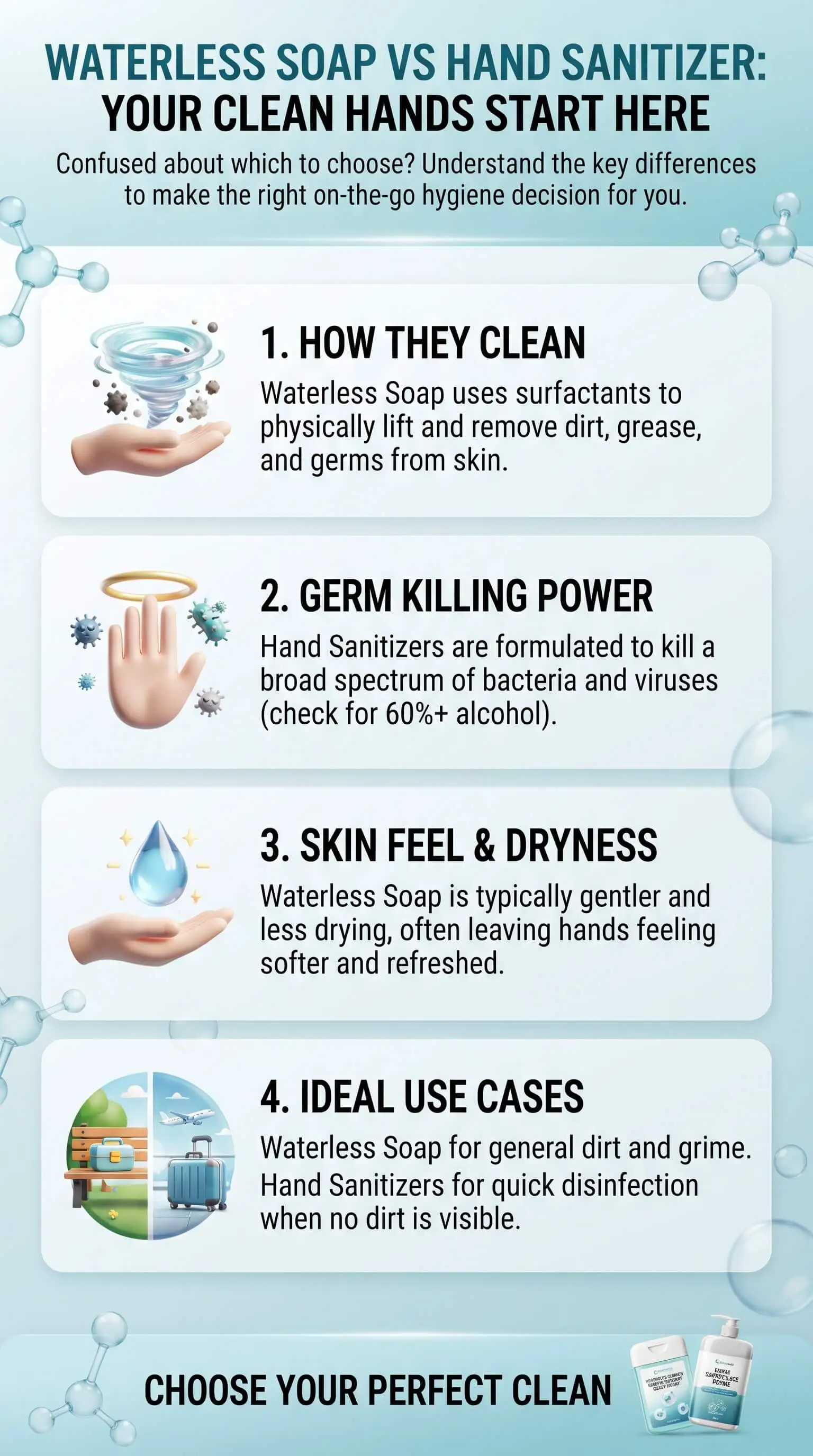
How each works: Sanitizer kills certain germs chemically with alcohol. Waterless soap lifts grime and germs off the skin so you can wipe or brush them away.
Dirty or greasy hands: Choose waterless soap. The CDC says sanitizer may not work well on visibly dirty or greasy hands.
Quick germ reduction: Choose a sanitizer with at least 60% alcohol for hands that already look clean.
After pesticides, the bathroom or raw food: Skip both portable options and wash with soap and running water.
Kids and sensitive skin: Alcohol-free waterless soap is gentler on skin. Store any alcohol sanitizer out of children's reach.
Bottom line: Removing germs beats killing them.
Top Takeaways
Soap and running water come first. Both portable options are backups for when a sink isn't closed.
Sanitizer kills, soap removes. Sanitizer deactivates certain germs and leaves dirt and residue behind. Waterless soap lifts grime and germs off your skin.
Dirty hands need removal. Sanitizer may not work well on visibly dirty or greasy hands.
Pesticides call for the sink. After handling lawn or pest chemicals, wash with soap and water and follow the label.
Check the label. Choose sanitizer with at least 60% alcohol, or a plant-based, alcohol-free formula for waterless soap.
Keep both out of reach of small children, especially alcohol-based products.
Most homes benefit from having both: waterless soap for messy moments and sanitizer for quick ones.
The Short Answer for First-Time Buyers
If your hands are visibly dirty, greasy or have been in the yard, choose a waterless soap, because it physically removes what's on your skin. If your hands look clean and you just want quick germ reduction between errands, an alcohol sanitizer with at least 60% alcohol does the job. When the sink is closed, use soap and running water. Every time.
Choose hand sanitizer if you mostly need a fast germ knockdown on clean-looking hands: grocery carts, door handles, the car.
Choose waterless soap if your hands get dirty where water isn't handy: yard work, trap checks, camping, sports sidelines, little kids.
Head to the sink if you've handled chemicals or raw food, used the bathroom, or someone in the house has a stomach bug.
What Waterless Soap and Hand Sanitizer Actually Are
What Is Hand Sanitizer?
Hand sanitizer is an alcohol-based gel, foam or liquid that kills many germs on contact and then evaporates. The CDC advises choosing one with at least 60% alcohol, and you can confirm that on the label.
What Is Waterless Soap?
Waterless soap is a rinse-free cleanser that loosens dirt, oil and germs so you can wipe or brush them away, no faucet needed. Formulas vary. Many, including plant-based options, are alcohol-free.
How Each One Works on Germs and Grime
Killing vs Removing
This is the whole ballgame. Sanitizer works chemically. It deactivates certain pathogens on contact, but whatever it doesn't kill stays on your skin, along with the dirt and the residue. Soap works mechanically. It binds to grime and oils, and the germs stuck in them come off with it.
Think of it like cleaning a countertop. Spraying disinfectant on crumbs doesn't get rid of the crumbs. You still have to wipe.
If you want the deeper science, NOWATA's doctor-led team breaks down which one actually removes more germs in a side-by-side comparison worth a read before you buy.
Where Sanitizer Falls Short
Sanitizer isn't useless. It just has limits, and the CDC is clear about them:
It may not work well when hands are visibly dirty or greasy, such as after gardening, fishing, camping or outdoor play.
Soap and water beat it against norovirus, Cryptosporidium and C. difficile.
It may not remove harmful chemicals like pesticides and heavy metals.
For anyone doing DIY pest control, that last point is the one to remember.
Waterless Soap vs Hand Sanitizer: Side-by-Side Comparison
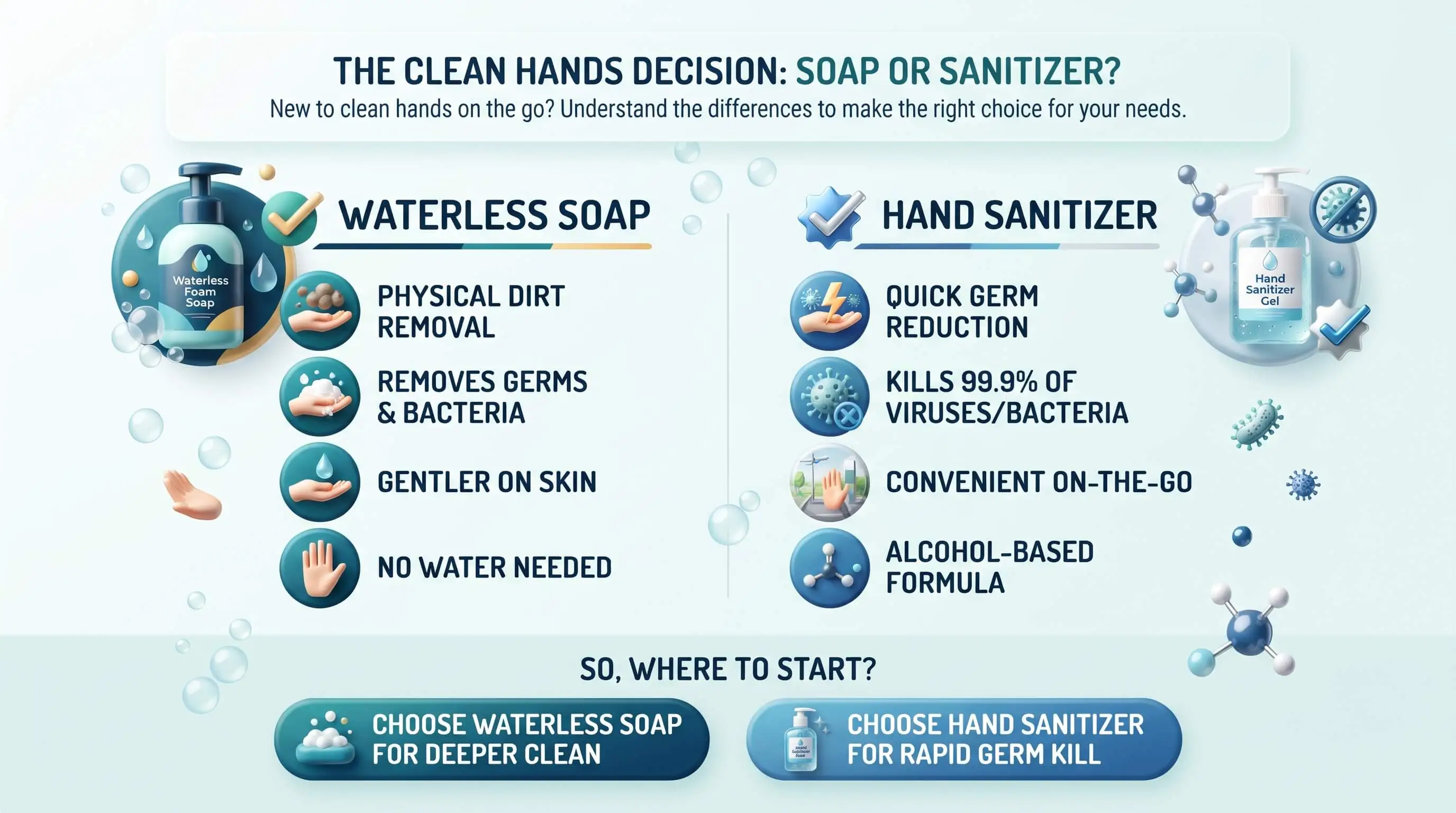
How it cleans: Sanitizer kills certain germs chemically. Waterless soap lifts dirt, oil and germs off the skin.
Visibly dirty or greasy hands: Sanitizer is not effective. Waterless soap is built for it.
What's left behind: Sanitizer leaves behind the germs it didn't kill, plus dirt and residue. Waterless soap leaves little to nothing once wiped away.
Effect on skin: The alcohol in sanitizer can dry hands with frequent use. Alcohol-free waterless soaps tend to be gentler.
Kids and ingestion risk: Alcohol sanitizer is a poisoning risk if swallowed. Alcohol-free waterless soap carries lower risk, but still stores it out of reach.
Best moments: Sanitizer suits quick germ reduction on clean-looking hands. Waterless soap suits messy moments away from a sink.
Where Each One Fits Around the House and Yard
After Setting Traps or Handling Bait Stations
You're dealing with dust, droppings residue and grime. Use waterless soap to clean up on the spot. Then wash with soap and water before you eat, smoke or touch your face. And follow the bait product's label every time.
After Applying Pesticides or Lawn Chemicals
This is where I'm blunt. Sanitizer is not the answer here, and neither is any portable product. Wash with soap and running water as the label directs. No shortcuts.
Gardening, Yard Cleanup and Outdoor Chores
Dirt-caked hands are exactly where sanitizer struggles. A removal-based cleanser gets the job done until you make it inside.
In the Car, at the Store and Between Errands
Hands look clean? Sanitizer is quick and convenient. Messy snack in the back seat? Waterless soap handles are sticky.
Kids, Pets and Family Use
Alcohol sanitizer needs to live out of reach of little hands. Many parents keep an alcohol-free waterless soap in the diaper bag and the car instead. It's also handy after scooping the litter box or feeding the dog when the sink is busy.
What to Look for When You Buy Your First Bottle
Know the job. Dirty hands call for waterless soap. Quick germ reduction calls for sanitizer.
Check the active ingredient. For sanitizer, at least 60% alcohol. For waterless soap, look for a plant-based surfactant formula without parabens or harsh additives.
Think about your skin. Frequent users and anyone with dry or sensitive skin should lean toward alcohol-free and fragrance-free options.
Ask how it finishes. Does it wipe off, brush off or leave a film? Residue is a fair question.
Do the math. Compare uses per bottle and whether refills exist. NOWATA, for example, makes a plant-based, alcohol-free, rinse-free soap and says each bottle gives roughly 80 to 100 uses.
Look for testing you can actually read. Brands that publish their lab methods earn more trust than ones that just print "99.9%" on the front.
"I've spent a lot of years in crawl spaces, attics and backyards where the closest water is a hose bib you can't reach. Early on, I kept a big bottle of sanitizer in the truck and figured I was covered. Then I noticed something. After a trap check, my hands felt 'clean' but still looked gray, and that grime ended up on my steering wheel, my lunch, everything. Sanitizer was killing some germs and leaving the rest of the mess right where it was. Now I tell homeowners the same thing I tell myself: if you can see dirt, you need something that removes it, not something that just sits on it. Keep a rinse-free soap for the messy moments, keep sanitizer for the quick ones, and never use either one as a substitute for real handwashing after you've touched pesticides."
7 Essential Resources
These are the sources I trust and send homeowners to. No fluff, just the people who set the rules.
CDC: Hand Sanitizer Guidelines and Recommendations explains when sanitizer works, the 60% alcohol rule, and how to apply it so it actually does its job.
CDC: Hand Sanitizer Facts covers the science on why sanitizer struggles with greasy hands, pesticides and certain germs.
CDC: Handwashing Facts and Stats shows the hard numbers on what good hand hygiene prevents.
FDA: Safely Using Hand Sanitizer gives practical safety tips for families, including flammability, ventilation and supervising kids.
Minnesota Department of Health: Cleaning Hands with Hand Sanitizer is a plain-language explainer on technique and why visible dirt has to come off first.
EPA: Dos and Don'ts of Pest Control is the federal checklist every DIY pest control homeowner should read before opening a bottle.
National Pesticide Information Center: Safe Use Practices for Pesticides offers label-first guidance, including washing up before you eat or smoke.
3 Statistics Worth Knowing
23% to 40%. Handwashing education in the community cuts the number of people who get sick with diarrhea by 23% to 40%. Clean hands matter, and how you clean them matters too. (CDC: Handwashing Facts and Stats)
19 to 21 million. Norovirus causes 19 to 21 million illnesses in the U.S. each year, and it's one of the germs soap and water handle better than sanitizer. (CDC: Norovirus Facts and Stats)
Nearly 85,000. U.S. poison centers received nearly 85,000 calls about children's exposure to hand sanitizer from 2011 to 2015. That's a big reason to store alcohol-based bottles up high. (CDC: Hand Sanitizer Facts)
Final Thoughts and Opinion
Here's my honest take on waterless soap vs hand sanitizer. They aren't rivals. They're tools for different jobs, and most first-time buyers end up owning both.
But if you can only buy one, and your days involve yards, traps, kids or anything messy, I'd start with waterless soap. Removing grime beats sitting on top of it. I've watched too many people "clean" their hands with sanitizer and then wipe the leftover dirt onto a sandwich.
Sanitizer still earns a spot in the glovebox for quick, clean-hands moments. And neither one replaces the sink after you've handled pesticides or before you cook. Wash with soap and water. Full stop.
Start simple. Put one bottle by the back door and one in the truck, and pay attention to which one you actually reach for.
Frequently Asked Questions
Is waterless soap the same as hand sanitizer?
No. Hand sanitizer uses alcohol to kill certain germs chemically, and it leaves dirt and residue on your skin. Waterless soap is a rinse-free cleanser that loosens dirt, oil and germs so you can wipe or brush them away. Many waterless soaps are alcohol-free.
Does hand sanitizer work on dirty or greasy hands?
Not well. The CDC notes that sanitizer may not be effective when hands are visibly dirty or greasy, such as after gardening, camping or fishing. In those moments, wash with soap and water, or use a removal-based cleanser until you can.
Can waterless soap replace washing with soap and water?
No, and it shouldn't try to. Washing with soap and running water is still the best choice in most situations. Waterless soap is for times you can't get to a sink: in the yard, in the car or on the trail.
Which is better for kids, waterless soap or hand sanitizer?
For messy little hands, waterless soap usually makes more sense because it removes the grime. Alcohol-based sanitizer can be dangerous if swallowed, so supervise kids who use it and store it out of reach. Alcohol-free formulas lower that risk, but keep any product away from toddlers.
Should I use hand sanitizer after handling pesticides or pest traps?
No. Sanitizer probably can't remove many harmful chemicals from your hands. After applying pesticides, wash with soap and water and follow the product label. After a trap check, waterless soap can handle the grime on the spot. Wash at a sink before you eat.
Is waterless soap better for dry or sensitive skin?
Often, yes. Alcohol can dry out hands with frequent use, while many waterless soaps are alcohol-free and plant-based. Look for fragrance-free formulas, and check the ingredient list if your skin reacts easily.
Ready to Pick Your First Bottle?
Don't overthink it. Look at where your hands get dirtiest, whether that's the backyard, the truck or the sidelines, and buy for that moment first. If you're considering sulfate-free hand soap, think about whether it fits those needs. Want to see how the two stack up on germ removal before you decide? Read the side-by-side comparison from NOWATA, then grab the bottle that fits your life.
Got a hand-hygiene trick from your own yard or job site? Drop it in the comments. I read every one.