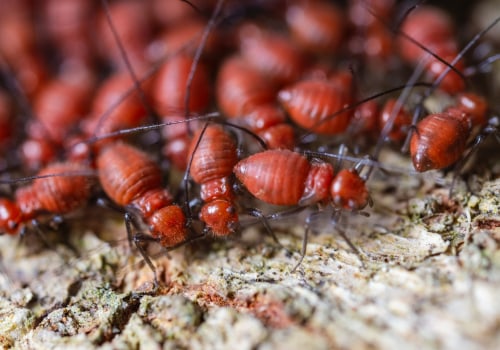
Noticing small black or dark brown spots on your sheets can be unsettling—and in many cases, it’s one of the earliest signs we see before a bed bug problem escalates. Bed bug fecal spots resemble tiny ink stains that seep into fabric rather than sitting on top of it, which is why they’re often missed or mistaken for dirt. Drawing from real-world cleanouts handled by JiffyJunk, this article explains exactly how to identify these marks, why they appear where they do, and what they reveal about bed bug activity so you can respond quickly and prevent a larger bed bugs infestation.
Quick Answers
Bed Bugs
Bed bugs are small, flat, reddish-brown insects that feed on human blood, usually at night while people sleep. They hide in mattress seams, bed frames, furniture, and nearby cracks, which is why infestations often go unnoticed at first. In real cleanout situations, the earliest signs are usually ink-like fecal spots, small blood smears on sheets, or unexplained bites—long before a live bug is seen. Catching these signs early can significantly reduce spread, stress, and the need for extensive furniture removal.
Top Takeaways
Bed bug fecal spots look like ink stains, not dirt.
They often appear before live bugs are seen.
Early detection keeps infestations smaller and cheaper to manage.
Ignoring stains allows bed bugs to spread to furniture.
Fast action is the most effective defense.
What Bed Bug Fecal Spots Look Like on Sheets
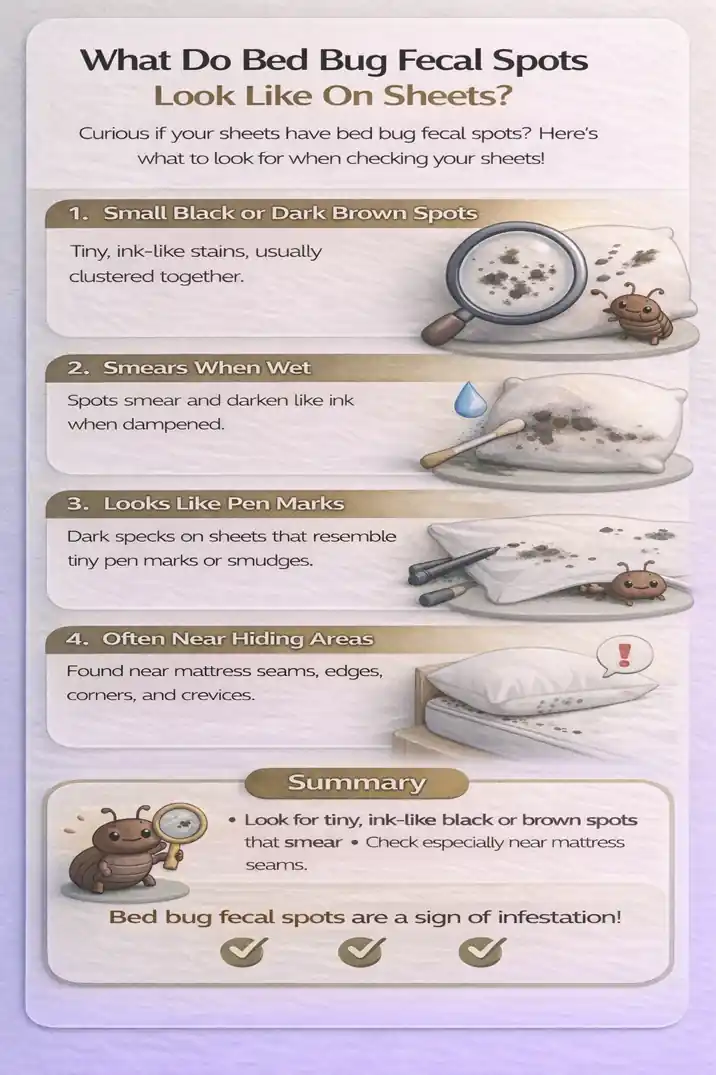
Bed bug fecal spots are usually small black or dark brown dots that resemble ink stains rather than solid debris. Unlike dirt or lint, these marks bleed into fabric fibers and may smear when wiped with a damp cloth. They are most often found near pillow seams, sheet edges, or areas where the body rests for long periods.
Why Bed Bug Fecal Spots Appear on Bedding
These spots are not typical waste—they are made from digested blood. Bed bugs feed at night and return to nearby hiding places, leaving fecal marks close to where they feed. In many real-world cleanout cases, these stains appear before a live bed bug is ever seen, making them one of the earliest warning signs.
How to Tell Bed Bug Fecal Spots Apart From Other Stains
One simple way to identify bed bug fecal spots is the water test. When lightly dabbed with water, the spots tend to spread like diluted ink. Common stains such as dirt, mold, or food usually remain intact. Fecal spots also appear in clusters or short lines, rather than randomly.
What Finding Fecal Spots on Sheets Means
Seeing these signs can indicate more than one underlying issue in the home, including bed bugs actively feeding nearby or buildup and debris within the vent system. When addressed early with professional dryer vent cleaning services, related problems such as hidden pest activity, trapped lint, and moisture buildup are far easier to control. Left untreated, these warning signs can contribute to a larger bed bug infestation and vent issues that become more difficult and expensive to eliminate.
“In our on-site cleanouts, bed bug fecal spots on sheets are often the first clue homeowners miss. When stains bleed into fabric like ink and reappear in the same sleeping areas, it’s usually a sign the infestation is already active—but still early enough to stop if addressed quickly.”
Essential Resources
EPA Bed Bug Guide — Practical Identification & Treatment Tips
https://www.epa.gov/bedbugs
Get clear, trustworthy guidance straight from the U.S. Environmental Protection Agency on how to spot bed bugs, understand treatment options, and avoid unsafe pesticide use — essential if you’re just starting your research.
Get clear, trustworthy guidance straight from the U.S. Environmental Protection Agency on how to spot bed bugs, understand treatment options, and avoid unsafe pesticide use — essential if you’re just starting your research.
CDC Bed Bug Resource — Bite Symptoms & Prevention Strategies
https://www.cdc.gov/parasites/bedbugs
The Centers for Disease Control offers medical insight into bed bug bites, health risks, and prevention tactics, helping you separate myths from science-backed facts.
The Centers for Disease Control offers medical insight into bed bug bites, health risks, and prevention tactics, helping you separate myths from science-backed facts.
NPMA Bed Bug Guide — Pest Professional Advice for Early Detection
https://www.pestworld.org/pest-guide/bed-bugs
From a leading pest management association, this guide shows early warning signs, behavior patterns, and when it’s time to consider professional help.
From a leading pest management association, this guide shows early warning signs, behavior patterns, and when it’s time to consider professional help.
Mayo Clinic — What Bed Bug Bites Really Look Like
https://www.mayoclinic.org/diseases-conditions/bed-bugs
For those wondering if the spots or bites they’re seeing are actually from bed bugs, Mayo Clinic gives clear, medical-reviewed explanations.
For those wondering if the spots or bites they’re seeing are actually from bed bugs, Mayo Clinic gives clear, medical-reviewed explanations.
Harvard T.H. Chan School of Public Health — Research-Based Bed Bug Insights
https://www.hsph.harvard.edu/bedbugs
Backed by academic research, this resource breaks down how bed bugs spread and why infestations can be so persistent — ideal if you want deeper context.
Backed by academic research, this resource breaks down how bed bugs spread and why infestations can be so persistent — ideal if you want deeper context.
University of Kentucky Entomology — Bed Bug Biology & Control Methods
https://entomology.ca.uky.edu/ef636
A highly cited university resource that explains bed bug behavior, hiding spots, and scientifically supported control strategies in accessible detail.
A highly cited university resource that explains bed bug behavior, hiding spots, and scientifically supported control strategies in accessible detail.
Consumer Reports — Real-World Product Advice & Treatment Options
https://www.consumerreports.org/pests/how-to-get-rid-of-bed-bugs-a3329821929
If you’re deciding between traps, sprays, or professional help, Consumer Reports tests and compares tools so you can choose what actually works.
If you’re deciding between traps, sprays, or professional help, Consumer Reports tests and compares tools so you can choose what actually works.
Supporting Statistics
Most people don’t recognize bed bugs early.
Fewer than 30% of Americans can correctly identify bed bugs.
In real cleanouts, this explains why fecal spots are often missed until infestations grow.
Source: NPMA / Harris Poll
https://www.pestworld.org/news-hub/pest-articles/bed-bug-survey-results-facts/
Travel is a common starting point for infestations.
Only 28% of Americans inspect hotel rooms for bed bugs.
Many infestations we encounter trace back to recent travel before stains appear at home.
Source: NPMA / Harris Poll
https://www.pestworld.org/news-hub/pest-articles/bed-bug-survey-results-facts/
Bed bugs are widespread across the U.S.
Over 80% of pest control professionals treat bed bugs every year.
This frequency supports why early signs—like fecal spots on sheets—matter.
Source: NPMA / University of Florida
https://www.pestworld.org/news-hub/pest-articles/bed-bug-survey-results-facts/
States regulate bed bugs for a reason.
20+ U.S. states have bed bug–related laws, especially for housing and hotels.
Mishandling infested furniture can lead to fines or further spread.
Source: U.S. EPA
https://www.epa.gov/bedbugs/bed-bug-laws-and-regulations
Bottom line:
Small stains are often the first warning. Catching them early can prevent a much larger, more expensive problem later.
Most people don’t recognize bed bugs early.
Fewer than 30% of Americans can correctly identify bed bugs.
In real cleanouts, this explains why fecal spots are often missed until infestations grow.
Source: NPMA / Harris Poll
https://www.pestworld.org/news-hub/pest-articles/bed-bug-survey-results-facts/
Travel is a common starting point for infestations.
Only 28% of Americans inspect hotel rooms for bed bugs.
Many infestations we encounter trace back to recent travel before stains appear at home.
Source: NPMA / Harris Poll
https://www.pestworld.org/news-hub/pest-articles/bed-bug-survey-results-facts/
Bed bugs are widespread across the U.S.
Over 80% of pest control professionals treat bed bugs every year.
This frequency supports why early signs—like fecal spots on sheets—matter.
Source: NPMA / University of Florida
https://www.pestworld.org/news-hub/pest-articles/bed-bug-survey-results-facts/
States regulate bed bugs for a reason.
20+ U.S. states have bed bug–related laws, especially for housing and hotels.
Mishandling infested furniture can lead to fines or further spread.
Source: U.S. EPA
https://www.epa.gov/bedbugs/bed-bug-laws-and-regulations
Final Thought & Opinion
Bed bug infestations rarely start with seeing a bug.
They usually begin with small, easy-to-miss signs, like fecal spots on sheets.
In real cleanouts, these stains are often ignored or mistaken for dirt.
Waiting almost always allows the problem to spread.
From firsthand experience, early action makes a clear difference:
Infestations are easier to contain.
Fewer personal items are affected.
Stress and cleanup costs stay much lower.
Once fecal spots spread beyond bedding and onto furniture, the situation becomes more disruptive and harder to control.
Bottom line:
Bed bug fecal spots aren’t just stains—they’re evidence of active feeding and movement. Treating them as an early warning instead of a mystery mark is often what prevents a small issue from turning into a major problem.
Bed bug infestations rarely start with seeing a bug.
They usually begin with small, easy-to-miss signs, like fecal spots on sheets.
In real cleanouts, these stains are often ignored or mistaken for dirt.
Waiting almost always allows the problem to spread.
Infestations are easier to contain.
Fewer personal items are affected.
Stress and cleanup costs stay much lower.
Once fecal spots spread beyond bedding and onto furniture, the situation becomes more disruptive and harder to control.
Next Steps
Take action early to prevent the problem from spreading.
Confirm the signs
Check sheets, mattress seams, and bed frames.
Use the water test—fecal spots smear like ink.
Stop the spread
Avoid moving bedding or furniture between rooms.
Seal linens in plastic bags before washing.
Wash and heat-dry bedding
Use hot water.
Dry on high heat for at least 30 minutes.
Inspect nearby furniture
Check headboards, nightstands, and upholstered items.
Spots on furniture often mean active spread.
Document what you find
Take photos.
Note where stains appear and how often.
Get professional help if needed
Reappearing spots are a warning sign.
Early help can prevent larger cleanouts later.
Acting quickly with top duct cleaning is the best way to keep a small issue from becoming a major problem.
Confirm the signs
Check sheets, mattress seams, and bed frames.
Use the water test—fecal spots smear like ink.
Stop the spread
Avoid moving bedding or furniture between rooms.
Seal linens in plastic bags before washing.
Wash and heat-dry bedding
Use hot water.
Dry on high heat for at least 30 minutes.
Inspect nearby furniture
Check headboards, nightstands, and upholstered items.
Spots on furniture often mean active spread.
Document what you find
Take photos.
Note where stains appear and how often.
Get professional help if needed
Reappearing spots are a warning sign.
Early help can prevent larger cleanouts later.
FAQ on Bed Bugs
Q: What do bed bug fecal spots look like?
A:
Small black or dark brown ink-like dots
Soak into fabric, not surface dirt
Smear when dampened
Q: Why are fecal spots often mistaken for dirt or mold?
A:
Very small and dark
Easy to dismiss at first glance
Commonly overlooked during early infestations
Q: Do fecal spots mean bed bugs are active?
A:
Yes, in most cases
Usually appear before live bugs are seen
Indicate nearby feeding activity
Q: Where do fecal spots appear first?
A:
Sheets and pillowcases
Mattress seams and edges
Bed frames and nearby furniture
Q: What should I do if fecal spots keep appearing?
A:
Isolate and clean bedding with heat
Inspect nearby furniture
Seek professional help if stains return
A:
Small black or dark brown ink-like dots
Soak into fabric, not surface dirt
Smear when dampened
A:
Very small and dark
Easy to dismiss at first glance
Commonly overlooked during early infestations
A:
Yes, in most cases
Usually appear before live bugs are seen
Indicate nearby feeding activity
A:
Sheets and pillowcases
Mattress seams and edges
Bed frames and nearby furniture
A:
Isolate and clean bedding with heat
Inspect nearby furniture
Seek professional help if stains return