This guide explains the most common valet trash service rules residents are usually required to follow across apartment communities, why those rules exist, and how to stay compliant without overthinking it. Whether you’re new to valet trash pickup or you’ve already dealt with missed collections, this page will help you understand what to do, what not to do, and how to avoid avoidable fees, notices, and service interruptions.
TL;DR Quick Answers
What is valet trash service?
Valet trash service is a scheduled trash pickup program where residents place tied trash bags outside their door during a set time window, and a valet team collects them and transports the waste to the community dumpster or compactor.
Jiffy Junk insight: In our experience, valet trash works best when residents follow three basics:
set trash out only during the approved window
use sealed, leak-proof bags
place trash in the correct pickup spot
When those rules are followed, missed pickups and complaints drop fast.
Top Takeaways
Follow the basics. Set-out time, bagging, and placement matter most.
Missed pickups are usually preventable. Most skips happen due to timing or incorrect placement.
Use sealed, leak-proof bags. Loose or leaking trash often gets rejected.
Know what’s not allowed. Bulky and hazardous items usually can’t go out for valet pickup.
Compliance saves money. Following the rules helps avoid warnings, violations, and extra fees.
Valet trash service is meant to be convenient, but it comes with rules that help keep the pickup process clean, safe, and consistent for the entire community. While every apartment complex may have its own specific policy, most valet trash programs follow the same general expectations for residents, especially when it comes to timing, bagging, placement, and restricted items.
Below are the most common valet trash rules residents are usually required to follow, along with simple explanations so you can avoid missed pickups, violations, or extra charges.
Set-Out Times
When you are allowed to leave trash outside
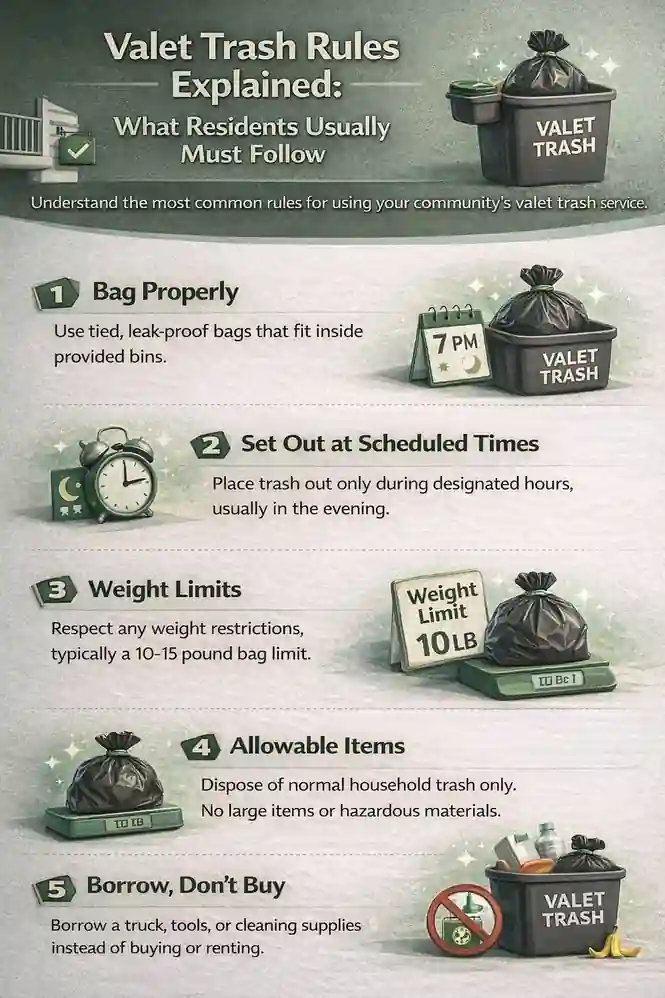
Most communities require residents to place trash outside only during a specific evening pickup window, often between set hours like 6 PM and 8 PM. Setting trash out too early can lead to odors, pests, and complaints, while setting it out too late can cause your trash to be skipped.
Tip: Always confirm your building’s exact set-out and pickup schedule, since times can vary by property.
Bag Requirements
How trash must be tied and contained
One of the most common rules is that trash must be placed in sealed, leak-proof bags. Loose trash, ripped bags, or overfilled bags are usually not accepted. Many communities also limit the number of bags per pickup, such as one to two bags per night.
This rule protects valet staff, prevents spills in hallways, and reduces odor buildup in shared areas.
Proper Placement
Where trash must be left for pickup
Valet trash pickup typically requires residents to place bags in a designated spot, such as:
outside the front door
near the doorstep without blocking walkways
inside an approved container or bin
Trash placed in the wrong location may be left behind for safety reasons, especially if it blocks stairs, breezeways, or emergency exits.
Prohibited Items
What valet trash usually will not take
Most valet trash services do not accept bulky, hazardous, or messy items, including:
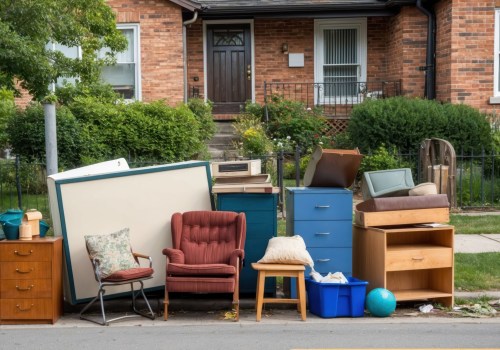
furniture, mattresses, or large boxes
broken glass unless properly labeled and contained
chemicals, paint, batteries, or medical waste
electronics or appliances
If you try to set out restricted items, you may receive a violation notice or be required to remove them immediately.
Cardboard and Recycling Rules
What needs to be broken down and separated
Many communities require residents to break down boxes and separate recycling properly. Oversized cardboard left unflattened often causes collection delays and overflow issues.
If your community offers valet recycling, it may require specific bins or clear bags, so mixing trash and recycling can result in rejected pickup.
Violations, Missed Pickups, and Possible Fees
Why trash gets skipped and what happens next
Valet trash programs often include enforcement rules. Common reasons trash gets skipped include:
trash set out outside the approved time
loose or leaking bags
prohibited items included
bags left in the wrong place
Repeated issues can lead to warnings, fines, or temporary suspension of service depending on your community’s policy.
Quick Resident Checklist
Simple rules to follow every pickup day
To stay compliant with most valet trash rules:
set trash out only during approved hours
use sealed, leak-proof trash bags
follow bag limits if your community has them
place bags in the approved pickup location
do not include bulky or hazardous items
break down boxes and follow recycling rules
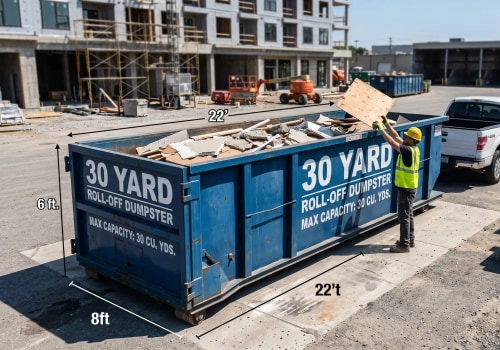
Following this quick resident checklist helps you stay compliant with valet trash pickup rules, and if you have bulky overflow or large cleanouts beyond bag limits, a dumpster rental may be the better option to avoid violations, missed pickups, and extra fees.
“From what we see in the field, the communities with the fewest valet trash complaints are the ones where residents follow the basics: sealed bags, correct placement, and the right set-out window. Those simple habits prevent spills, pests, and skipped pickups.”
Essential Resources
Valet trash service can be a great amenity—but only when you understand how it works, what rules residents must follow, and what fees or expectations come with it. At Jiffy Junk, we’ve seen that most frustrations around valet trash come from unclear policies and mismatched expectations, not the service itself.
The resources below help you make an informed decision by covering the essentials: how valet trash works, what residents must do, what property managers should look for, and how costs and fees are typically handled.
1) Valet Trash Service Basics, Explained Clearly
Benefit: Quickly understand what valet trash service is and how it works
This guide explains doorstep trash pickup in plain terms, including why apartment communities use valet trash and what residents can expect from the schedule.
https://www.apartmentguide.com/blog/valet-waste/
2) What Valet Trash Pickup Usually Includes
Benefit: Learn what “standard service” looks like day-to-day
A practical overview of how valet trash operates, including collection routines, service expectations, and how pickup programs are commonly structured.
https://www.trashbutler.com/what-is-valet-trash/
3) The Most Common Valet Trash Rules Residents Must Follow
Benefit: Avoid missed pickups by understanding the rules upfront
This resource covers the basics that determine whether trash gets collected: set-out windows, bagging requirements, placement rules, and prohibited items.
https://www.trashbutler.com/valet-trash-rules/
4) Mandatory Valet Trash Fees and What Tenants Should Know
Benefit: Understand fees, lease language, and tenant rights
This legal perspective helps renters understand how valet trash fees work, what should be disclosed in leases, and what questions to ask before signing.
https://legalclarity.org/tenant-rights-and-mandatory-valet-trash-fees-in-apartments/
5) Why Property Managers Choose Valet Trash Service
Benefit: See the operational value behind the amenity
This resource explains how valet trash can improve cleanliness, reduce overflow issues, support retention, and create a better resident experience.
https://verdantservice.com/apartment-valet-trash-service-how-it-works-and-why-communities-love-it/
6) How a Large Provider Runs Valet Trash Programs
Benefit: Understand what professional, consistent service looks like at scale
This provider overview shows how valet trash programs are structured, staffed, and managed for consistency—helpful for property managers comparing vendors.
https://www.valetliving.com/property-management/valet-living-doorstep/
7) Full Valet Trash Workflow From Doorstep to Dumpster
Benefit: Visualize the entire process so expectations match reality
This resource walks through how trash is collected, transported, and handled during routes, including how recycling may be included depending on the property.
https://thetrashvaletpros.com/what-is-valet-trash/
Together, these resources help residents and property managers understand how valet trash service works day to day, when rules apply, and when overflow, bulky items, or violations may require a junk removal service to keep communities clean, compliant, and running smoothly.
Supporting Statistics
At Jiffy Junk, we’ve seen that valet trash service works best when rules are followed. The stats below explain why collection windows, sealed bags, and prohibited item lists exist in the first place.
1) Trash volume is huge, so timing and bag rules matter
EPA reports the U.S. generated 292.4 million tons of municipal solid waste in 2018.
That equals 4.9 pounds per person per day.
Jiffy Junk insight: with that daily volume, small rule violations quickly become major pickup problems.
2) Batteries and electronics in trash are linked to real fires
We often see residents toss batteries or small electronics into regular trash.
EPA analysis identified 64 waste facilities that experienced 245 fires from 2013–2020 linked to lithium metal or lithium-ion batteries.
Fires occurred across 28 states.
Jiffy Junk insight: this supports why valet trash programs prohibit batteries and e-waste.
Source: https://www.epa.gov/system/files/documents/2021-08/lithium-ion-battery-report-update-7.01_508.pdf
3) Outside trash and rubbish fires happen every year
NFPA reports an estimated 9,440 outside trash or rubbish fires per year (2014–2018 average) tied to “playing with fire.”
Jiffy Junk insight: trash left out too long increases risk, which is why set-out windows matter.
Final Thought & Opinion
Valet trash service is a great amenity when it runs like a system, not a casual drop-off. That is why collection windows, sealed bag rules, placement guidelines, and prohibited item lists matter.
What we see at Jiffy Junk
In our first-hand experience, most valet trash problems are not caused by “bad residents.” They happen when rules are unclear or ignored, such as:
trash set out too early or too late
bags not sealed or leaking
prohibited items mixed in
trash placed in unsafe or incorrect locations
In a multi-unit community, small issues multiply fast. This leads to:
missed pickups
odor complaints
pest issues
avoidable safety risks
By following valet trash rules consistently, communities can reduce missed pickups, odors, and pest issues—lowering the need for professional pest control services and keeping shared living spaces cleaner, safer, and more comfortable for everyone.
FAQ on Valet Trash Service
Q: What is valet trash service and how does it work?
A: Valet trash service is scheduled doorstep trash pickup, usually for apartment communities.
Residents set out tied trash bags during the collection window
A valet team collects bags and takes them to the dumpster or compactor
Q: What time can residents usually set out trash for valet pickup?
A: Most communities use an evening set-out window, often around 6 PM to 8 PM.
Exact hours vary by property
Trash outside the window may be skipped
Q: Why does valet trash get skipped?
A: In our experience, most missed pickups happen due to:
Trash set out too early or too late
Bags not sealed or leaking
Trash placed in the wrong pickup location
Prohibited items included
Q: What items are usually not allowed in valet trash pickup?
A: Common restricted items include:
furniture and mattresses
large boxes
chemicals, paint, batteries
medical waste
electronics and appliances
These items usually require bulk pickup or special disposal.
Q: Does valet trash service include recycling?
A: Sometimes. Some properties offer valet recycling.
Recycling may require specific bins or clear bags
Cardboard often must be broken down
Mixing trash with recycling can cause rejection