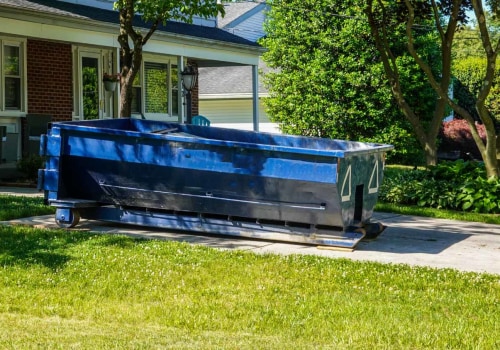
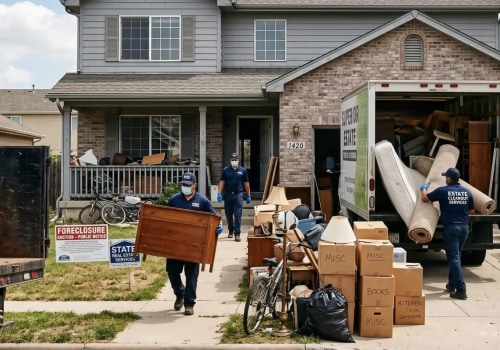
This guide breaks down what post-estate cleanout cleaning costs, what factors raise the price (home condition, deep cleaning needs, specialty services), and how to budget smart—so you can get the property truly move-in or market ready without surprise expenses.
TL;DR Quick Answers
Estate cleanout cost
Estate cleanout cost depends on how much needs to be removed, how long the job takes, and what disposal fees apply—not just the home’s size.
At Jiffy Junk, the biggest pricing changes usually come from hidden volume in closets, basements, garages, and attics, plus heavy or restricted items like appliances, mattresses, electronics, and paint. A quick walkthrough and basic sorting upfront is the best way to avoid surprise charges and get a realistic estimate fast.
Top Takeaways
Cost isn’t based on home size alone.
It’s driven by volume, labor time, and disposal fees.Start with a room-by-room volume estimate.
This sets a realistic budget fast.Heavy + restricted items raise pricing the most.
Examples: appliances, mattresses, electronics, paint/chemicals.Donation sorting can lower your total cost.
Less landfill volume = fewer disposal fees.Plan in stages and expect hidden volume.
Garages, attics, and basements often add the most.
Cleaning costs after an estate cleanout can range widely because every home is in a different condition once the contents are removed. Some properties only need a light clean to remove dust and debris. Others require deep cleaning due to years of buildup, stains, odors, pests, or neglected rooms.
At Jiffy Junk, we often find that the cleanout reveals what was hidden—under rugs, behind furniture, inside cabinets, and in storage spaces. That’s why budgeting for cleaning should be part of your estate cleanout plan, not an afterthought.
What’s Typically Included in Post-Cleanout Cleaning
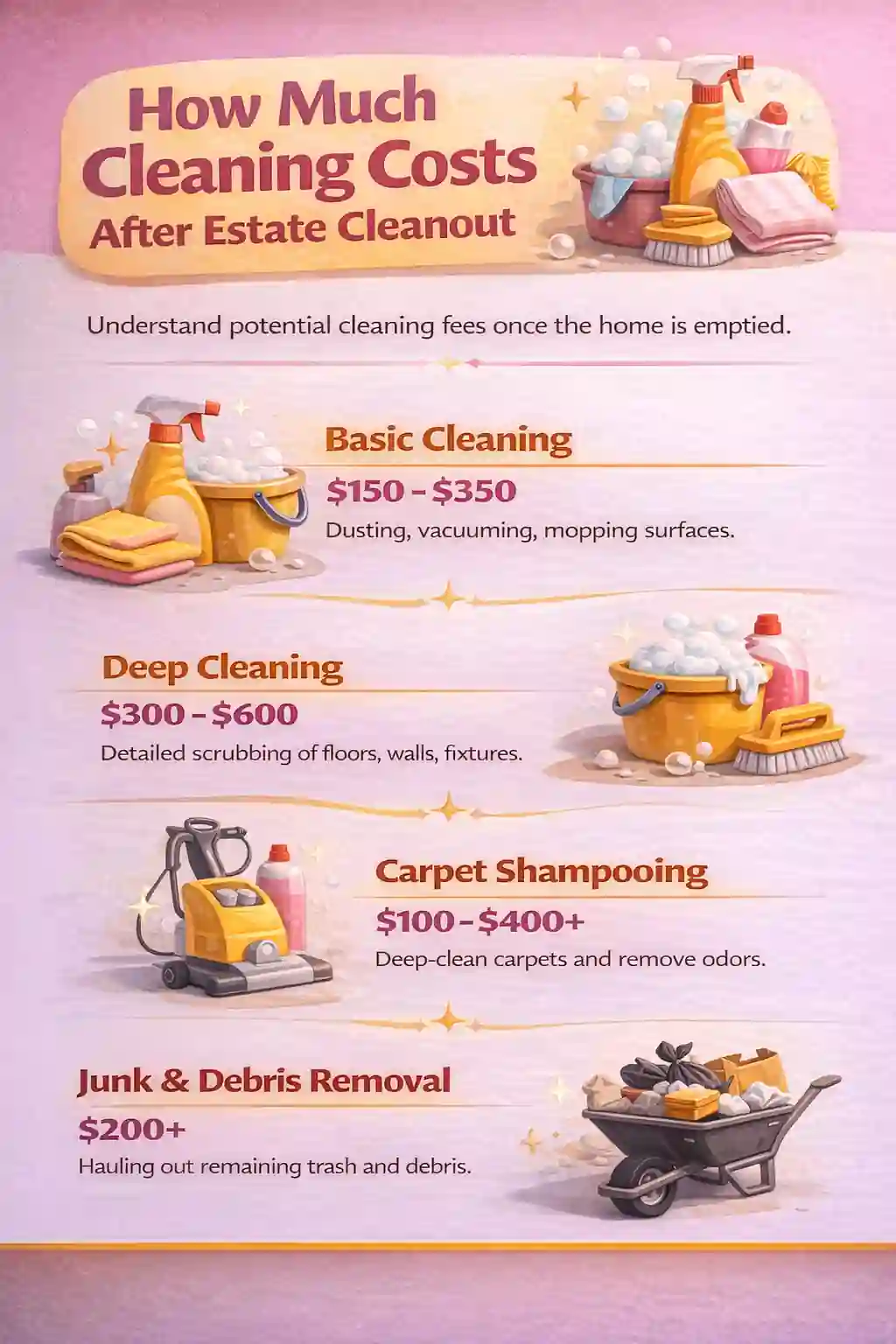
Most post-estate cleanout cleaning services fall into three levels:
Basic Cleaning
Sweeping, vacuuming, light wipe-downs, and minor debris cleanup.
Deep Cleaning
Scrubbing floors, baseboards, kitchens, bathrooms, and inside cabinets.
Specialty Cleaning
Odor removal, mold treatment, pest cleanup, and biohazard services.
Key Factors That Affect Cleaning Cost After an Estate Cleanout
Several factors can raise or lower your final cleaning bill:
Home size: more square footage = more time and labor
Condition of the home: heavy buildup, grime, or stains increases cost
Bathrooms and kitchens: these areas take the most time to clean
Odors and contamination: smoke, pet urine, mold, or decay require specialty work
Timeline: urgent “rush” cleanings may cost more
Add-on services: carpet shampooing, window washing, or floor refinishing
In short, cleaning cost is usually driven by time + condition, not just square footage.
Typical Types of Cleaning Needed After an Estate Cleanout
Here are the most common cleaning needs we see after an estate cleanout:
Thick dust layers and debris
Sticky kitchen cabinets and appliances
Bathroom scale, stains, and buildup
Carpet stains and odors
Pet hair and urine damage
Mold or mildew in damp areas
Grime on walls, baseboards, and vents
If any of these issues are present, the home usually needs more than a standard cleaning service—it often requires a professional pest control service.
How to Budget for Cleaning After an Estate Cleanout
To plan your budget correctly, take these steps:
Step 1: Do a Walkthrough After the Cleanout
Once everything is removed, you’ll get the clearest view of what needs cleaning.
Step 2: Decide the Level of Cleaning Needed
Ask: Is the goal move-in ready, listing ready, or just “clean enough”?
Step 3: List Any Specialty Issues
Odors, pests, mold, or biohazards should be planned upfront.
Step 4: Get Quotes Based on Condition (Not Guesswork)
Provide photos or request an in-person estimate.
Step 5: Add a Buffer for Surprises (10–20%)
Some issues only show up after carpets are lifted or cabinets are emptied.
When You Should Consider Specialty Cleaning
If the estate includes any of the following, specialty cleaning may be needed:
Strong odors (smoke, pet urine, decay)
Visible mold or mildew
Pest infestation (droppings, nests)
Biohazard risk (blood, bodily fluids, hoarding waste)
These situations often require trained professionals and may cost more—but they also protect the home’s value and safety.
Final Tip: Cleanout + Cleaning Works Best as a Plan
The smoothest estate transitions happen when cleaning is planned alongside the cleanout. When you budget for both steps, you avoid delays and get the home ready faster—whether you’re selling, renting, or preparing it for family.
If you want the most accurate estimate, focus on two things: the home’s condition and the level of “ready” you need it to be.
“The biggest surprise for most families isn’t the cleanout—it’s what’s underneath it. After hundreds of estate cleanouts and junk removal service jobs, we’ve seen that post-cleanout cleaning costs are usually driven by condition and complexity: kitchens, bathrooms, odors, and years of buildup that were hidden behind furniture.”
Essential Resources
Waste Removal USA — Get a Simple Breakdown of What Estate Cleanouts Really Cost
If you’re trying to understand pricing before you start calling companies, this guide lays out the basics—volume, labor, and disposal fees—so you can budget with fewer surprises.
URL: https://wasteremovalusa.com/blog/how-much-does-an-estate-cleanout-cost/
Leave The Key Probate Services — Understand Cost Drivers for Probate and Estate Situations
Estate cleanouts tied to probate often come with extra pressure and timelines. This resource explains what impacts pricing most—like clutter level, hazardous items, and labor intensity—so you’re not caught off guard.
URL: https://probate.leavethekey.com/resources/estate-cleanout-cost/
EstateQuoter — Use Cost Ranges by Property Size to Set Expectations Fast
This is a helpful starting point when you’re asking, “What should this cost?” It breaks pricing into ranges by property type so you can quickly get a sense of what’s realistic.
URL: https://estatequoter.com/blog/estate-cleanout-cost.html
The Owner-Builder Network — See the Full Estate Cleanout Process (So You Can Budget Step-by-Step)
One of the easiest ways to control cost is understanding the full process. This guide walks through cleanout stages so you can plan your time, labor, and expenses more clearly.
URL: https://theownerbuildernetwork.co/complete-guide-to-estate-cleanout/
Getting WeCycle — Check Updated Cost Estimates and What Changes the Final Price
If you want a more current view of pricing, this resource covers cost estimates and explains how location, labor rates, and special items can push totals higher.
URL: https://getwecycle.com/blogs/estate-cleanout-services-cost
Spartan Junk — Learn Smart Ways to Lower Estate Cleanout Cost
This guide is useful if you’re trying to save money. It covers what to expect and shares practical tips on how to prepare—so you can reduce labor time and avoid extra fees.
URL: https://www.spartanjunk.com/how-much-does-an-estate-cleanout-cost/
Hometown Dumpster Rental — Decide If a Dumpster is the Right (or Wrong) Move for Your Budget
Dumpster rental can look cheaper upfront—but costs can climb fast with weight limits and overage fees. This resource helps you understand when a dumpster makes sense for an estate cleanout.
URL: https://www.hometowndumpsterrental.com/blog/estate-cleanout-costs
Supporting Statistics
Volume adds up fast
U.S. generated 292.4 million tons of municipal solid waste (2018).
Average: 4.9 lbs per person per day.
Jiffy Junk insight: Closets, basements, garages, and attics often double the expected volume.
Source (EPA): https://www.epa.gov/facts-and-figures-about-materials-waste-and-recycling/national-overview-facts-and-figures-materials
Labor drives pricing
Median annual wage for hand laborers/material movers: $37,680 (May 2024).
Cleanouts involve:
heavy lifting
sorting
stairs + long carry distances
Jiffy Junk insight: Time + effort often matter more than home size.
Source (BLS): https://www.bls.gov/ooh/transportation-and-material-moving/hand-laborers-and-material-movers.htm
Disposal fees are rising
Average U.S. landfill tipping fee: $62.28 per ton (2024).
Increase: 10% year-over-year.
Jiffy Junk insight: Local dump fees + restricted items can change your total quickly.
Source (EREF): https://erefdn.org/product/2024-analysis-of-municipal-solid-waste-msw-landfill-tipping-fees/
Donation can reduce dump costs
Goodwill diverts 3+ billion pounds from landfills each year.
Jiffy Junk insight: Donation sorting lowers landfill volume and can cut disposal fees.
Source (Goodwill): https://www.goodwill.org/blog/local-goodwill-organizations-support-sustainability-efforts/
Supporting statistics show why a garage cleanout can cost more than expected—because volume adds up quickly, labor time drives pricing, disposal fees keep rising, and donation sorting can reduce landfill costs.
Final Thought & Opinion
Estate cleanout cost planning is really about one thing: removing the guesswork before the job starts. When you plan upfront, the cost becomes easier to predict—and easier to control.
What keeps costs under control
The cleanouts that stay on budget usually include:
A room-by-room volume estimate
Early identification of heavy + bulky items
Sorting for donation vs. disposal
Planning for local dump fees + restricted items
Jiffy Junk opinion (from real cleanouts)
In our experience, cleanouts go over budget most often because there’s no clear plan, not because the home is “too big.”
We’ve seen families expect a simple pickup—then discover:
Garages packed wall-to-wall
Basements full of decades of storage
Restricted items needing special disposal
That’s when costs rise: more volume + more labor + more disposal complexity.
Bottom line
Don’t chase the cheapest quote.
Instead:
Understand what you’re paying for
Plan the cleanout in stages
Budget for disposal realities upfront
In our experience, clarity is what saves money and makes the entire process smoother.
FAQ on Estate Cleanout Cost
Q: How much does an estate cleanout cost?
A: It depends on the job. At Jiffy Junk, the biggest pricing factors are usually volume, labor time, access (stairs/tight spaces), and disposal fees for restricted items.
Q: What impacts estate cleanout cost the most?
A: The cost is typically driven by how much needs to be removed, how heavy the items are, how difficult the home is to access, how long sorting takes, and whether restricted items like mattresses, electronics, or paint are involved.
Q: Is renting a dumpster cheaper than hiring a cleanout company?
A: Sometimes, but only if you can handle the labor. Dumpster costs can increase quickly due to weight limits, overage fees, permits, and the time it takes to load everything yourself.
Q: Can donating items reduce estate cleanout cost?
A: Yes. Separating donation-ready items early can reduce landfill volume, lower disposal fees, and make the cleanout faster and more efficient.
Q: How do I avoid surprise charges during an estate cleanout?
A: Plan upfront by identifying heavy and restricted items, checking high-volume storage areas like garages and basements, and adding a 10–20% buffer for hidden volume.