Quick Answers
Acetone Disposal
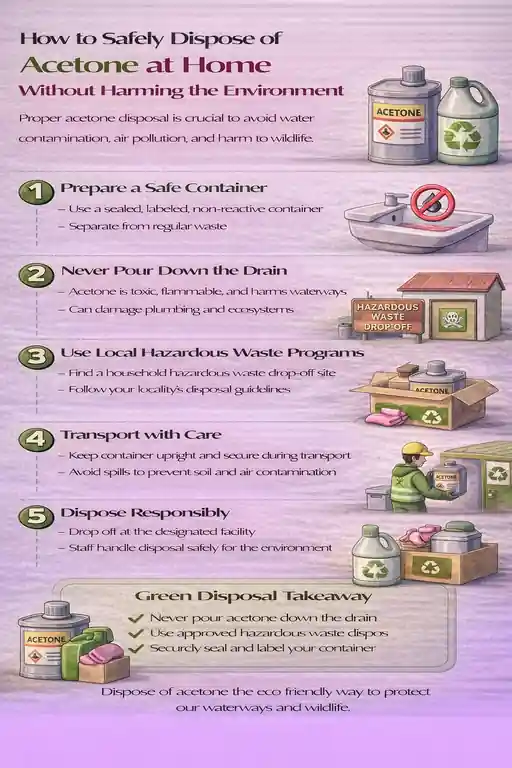
Acetone should never be poured down drains, dumped outdoors, or placed in regular trash. From real cleanout experience, the safest option depends on quantity:
Small amounts: Limited outdoor evaporation only if local rules allow
Soaked materials: Seal in a fire-resistant container
Larger quantities: Use a household hazardous waste facility or professional removal
When disposal feels unclear, choosing regulated or professional handling prevents fire, fume, and environmental risks.
Top Takeaways
Acetone is not regular household waste.
Improper disposal creates fire and environmental risks.
Never pour acetone down drains or into trash.
Soaked materials can ignite if mishandled.
When unsure, choose regulated or professional removal.
Why Acetone Requires Extra Care in Residential Settings
In many homes, acetone is treated as a minor chemical because it’s commonly used for nail care, paint cleanup, and small DIY projects. What’s often overlooked is how aggressively it behaves once it leaves the container. Acetone vapors spread quickly, ignite easily, and can travel through plumbing or soil if disposed of improperly. During home cleanouts, we frequently find acetone stored in ways that quietly increase fire and environmental risk.
Disposal Approaches That Protect the Environment
Keeping Acetone Out of Drains and Trash
Environmentally safe disposal starts with avoiding shortcuts. Pouring acetone into drains or mixing it with household trash allows fumes to enter sewer systems and waterways, where contamination becomes difficult to control.
Safe Options for Small Household Quantities
For households with small leftover amounts, local regulations may allow limited evaporation outdoors under controlled conditions. This must be done in open, well-ventilated areas away from heat and ignition sources.
Responsible Solutions for Larger Volumes
For larger quantities—especially those uncovered during garage or workshop cleanouts—household hazardous waste programs or professional junk removal services provide the safest, most environmentally responsible disposal.
The Hidden Risk of Acetone-Soaked Items
Why Soaked Materials Are More Dangerous Than Liquid
Rags, paper towels, and absorbent materials trap acetone vapors and can ignite long after they appear dry. Proper containment is essential to prevent fires and environmental exposure.
Proper Containment Prevents Secondary Hazards
Sealing soaked materials in fire-resistant containers keeps vapors contained and reduces the risk of ignition or contamination.
When Professional Removal Makes the Most Sense
Signs It’s Time to Call a Junk Removal Service
Multiple containers, aging solvents, or mixed chemicals are clear indicators that professional handling is the safest choice.
How Professional Removal Protects Homes and Communities
Trained junk removal teams ensure acetone is transported and disposed of according to environmental and safety standards, reducing risk to homeowners and surrounding areas.
Responsible Disposal Is Part of Sustainable Home Care
Safely disposing of acetone isn’t just about compliance—it’s about protecting air, water, and soil from long-term harm. Choosing regulated disposal methods or professional removal, similar to professional pest control services that prevent issues before they escalate, helps prevent problems before they start, supporting a safer home and a healthier environment.
“During home cleanouts, we’ve learned that acetone rarely causes problems on its own—it’s the way it’s overlooked that creates risk. The safest disposals happen when homeowners treat acetone like the flammable solvent it is and choose containment or professional removal before environmental damage ever starts.”
Essential Resources
When we’re helping homeowners clear out garages, workshops, or old storage areas, these are the same resources we reference to make sure acetone is handled safely, legally, and with the environment in mind. They’re practical, trustworthy, and grounded in real-world use—not theory.
EPA Hazardous Waste Guidance – The Baseline for Doing It Right
This EPA resource explains how hazardous waste is defined and managed in the U.S., including flammable solvents like acetone. It’s the starting point we use to understand what’s allowed and what’s not before disposal.
https://www.epa.gov/regulatory-information-topic/regulatory-and-guidance-information-topic-waste
Resource Conservation and Recovery Act (RCRA) – Why Disposal Rules Exist
RCRA is the federal law behind hazardous waste regulations. While homeowners don’t need to read legal text line by line, this overview explains why improper acetone disposal creates environmental and legal risks.
https://en.wikipedia.org/wiki/Resource_Conservation_and_Recovery_Act
Leftover Acetone Disposal Guide – Practical Advice for Households
This guide focuses on common at-home scenarios, like half-used bottles from DIY or nail care. It highlights mistakes we see often during cleanouts and offers safer alternatives.
https://welly.it.com/what-do-you-do-with-leftover-acetone-the-ultimate-guide-to-safe-disposal/
EthicalShift Acetone Disposal Guide – Environmental Impact Explained
If you want to understand how acetone affects soil, water, and air when it’s dumped improperly, this resource breaks it down clearly. It’s helpful for homeowners trying to reduce environmental harm.
https://www.ethicalshift.com/recycle/how-to-dispose-of-acetone-safely-and-responsibly
ChemCafe Disposal Methods – Matching the Method to the Amount
ChemCafe lays out disposal options based on how much acetone you’re dealing with. This is useful when we’re helping customers decide whether a hazardous waste drop-off or professional removal makes more sense.
https://chemcafe.net/chemistry/how-to-dispose-of-acetone-5826/
Miami County Recycles Guide – What Local HHW Programs Look Like
This local example shows how many communities handle household hazardous waste, including acetone. It gives homeowners a realistic idea of what drop-off programs typically accept.
https://www.miamicountyrecycles.org/material-disposal-guide
Household Hazardous Waste Overview – Why Common Products Still Need Care
This overview explains why everyday products like acetone are still classified as household hazardous waste and why they shouldn’t be treated like normal trash during cleanouts.
https://en.wikipedia.org/wiki/Household_hazardous_waste
These resources reflect the same approach we take on the job: understand the risks, use trusted guidance, and choose disposal options that protect both the home and the environment.
Together, these resources reinforce a responsible approach to acetone disposal by emphasizing safety, legality, and environmental protection, the same standards followed when coordinating regulated waste handling through a valet trash service during garage, workshop, or household cleanouts.
Supporting Statistics
These numbers reflect what we routinely see during home cleanouts and hazardous removals.
Household hazardous waste adds up.
EPA: 20+ lbs per household per year
Some homes store up to 100 lbs over time
Old solvents like acetone are common
Source: https://archive.epa.gov/region9/waste/archive/web/html/house.htmlAcetone is highly flammable.
Flash point: 0°F
Explosive vapor range: 2.5%–12.8% in air
Small amounts still pose fire risk
Source: https://www.osha.gov/chemicaldata/476Fumes become dangerous quickly indoors.
NIOSH IDLH: 2,500 ppm
Poor ventilation accelerates risk
Garages and basements are common problem areas
Source: https://www.cdc.gov/niosh/idlh/67641.htmlEmergency standards confirm high risk.
NFPA fire rating: 3 (high)
Treated seriously by responders and cleanup teams
Source: https://www.osha.gov/chemicaldata/476
Bottom line: These statistics align with real-world experience—acetone becomes hazardous fast when stored or disposed of incorrectly, especially in residential settings like a garage cleanout where flammable materials are often concentrated.
Final Thought & Opinion
From what we see during residential cleanouts, acetone becomes risky not because people ignore safety—but because the danger isn’t obvious.
What experience consistently shows:
Acetone is often stored, forgotten, and underestimated
Problems surface during cleanouts, not at purchase
Environmental and fire risks build quietly over time
Safer outcomes happen when homeowners:
Treat acetone like a flammable solvent, not a household liquid
Avoid quick disposal shortcuts
Choose containment or regulated removal when unsure
Our opinion:
Uncertainty is a signal to slow down. Environmentally responsible disposal—or professional removal—prevents predictable problems and protects both the home and the environment.
FAQ on Acetone Disposal
Q: Is acetone hazardous waste at home?
A:
Acts like hazardous waste
Flammable and volatile
Always handled with precautions
Q: Why shouldn’t acetone go down the drain?
A:
Creates vapor buildup
Damages plumbing
Increases fire risk later
Q: What’s the safest option for small amounts?
A:
Outdoor evaporation only if allowed
Tiny quantities only
Hazardous waste drop-off when unsure
Q: Why are acetone-soaked rags dangerous?
A:
Trap flammable vapors
Can ignite after drying
Must be sealed properly
Q: How should large amounts be handled?
A:
Use hazardous waste facilities
Or professional removal services
Avoid long-term storage