This step-by-step guide explains how to remove bed bug–infested furniture the right way, using practical lessons from on-site experience. You’ll learn how to contain the item, decide if it can be saved, and remove it safely through bed bug furniture removal—so you stop the infestation at the source instead of chasing it from room to room.to room.
TL;DR Quick Answers
bed bug furniture removal
Contain first. Seal infested furniture before moving it.
Don’t rush removal. Most spread happens during improper handling.
Assess before discarding. Some furniture can be treated; heavily infested upholstery often can’t.
Avoid storage. Bed bugs can survive for months inside furniture.
Remove with control. Proper sealing, labeling, and transport prevent re-infestation.
Top Takeaways
Contain first.
Seal furniture before moving.Don’t rush.
Improper handling spreads bed bugs.Evaluate before removing.
Some furniture can be treated.Avoid storage.
Bed bugs survive for months.Remove with control.
Proper sealing prevents spread.
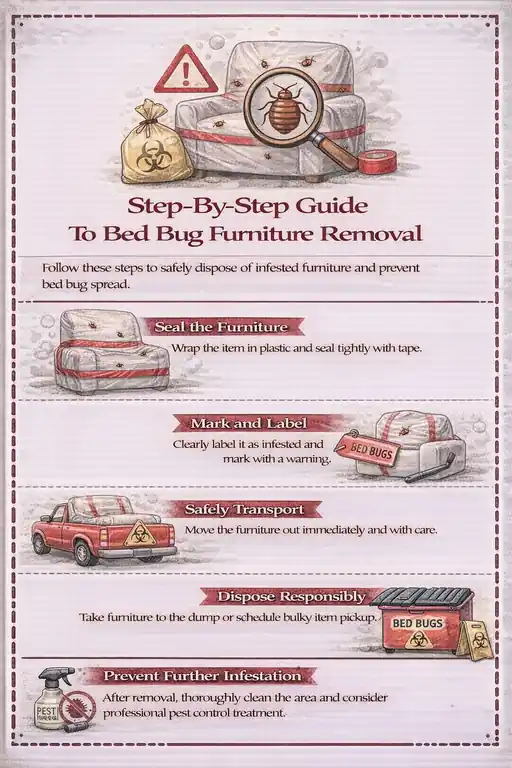
Step-By-Step Guide To Bed Bug Furniture Removal
Removing bed bug–infested furniture isn’t about speed—it’s about control. From real-world removals, the most successful outcomes follow a clear sequence: contain first, evaluate second, remove only when necessary. Skipping steps is how infestations spread—especially before hiring a professional pest control service.
Step 1: Confirm and Isolate the Furniture
Before doing anything else, confirm that bed bugs are present. Once suspected, stop using the furniture immediately and isolate it in place. Avoid dragging it through the home, which is one of the most common ways bed bugs spread beyond the original area.
Step 2: Seal Before You Move Anything
Containment is critical. Infested furniture should be fully sealed using heavy-duty plastic or professional-grade wrap before it’s moved. From removal experience, uncovered movement is the single biggest cause of hallway, stairwell, and secondary-room infestations.
Step 3: Decide if the Furniture Can Be Saved
Not all furniture requires removal. Solid wood or metal pieces may be treatable. Upholstered furniture with deep seams, padding, or heavy infestation is often far harder to clear and frequently leads to repeat problems if kept. This decision should be made before moving the item.
Step 4: Remove the Furniture Safely
If removal is necessary, the furniture should stay sealed during transport and be handled in a controlled way. Improper removal—such as leaving items uncovered at the curb—can spread bed bugs to neighbors or shared buildings.
Step 5: Clean and Monitor the Area
After removal, vacuum the surrounding area thoroughly and wash nearby fabrics on high heat. Continued monitoring helps ensure the infestation doesn’t return from overlooked items or hidden eggs.
“In our removal work, bed bugs don’t spread because people wait—they spread because furniture gets moved without containment. The most effective removals follow a simple order: isolate first, seal completely, then decide if removal is actually necessary. When those steps are followed, we see infestations stop instead of spreading room to room.”
Essential Resources
When you’re dealing with bed bug–infested furniture, the right information matters. These trusted resources give you clear guidance on inspection, containment, treatment options, disposal rules, and next steps — so you can make the best choice before scheduling professional removal with Jiffy Junk.
EPA Bed Bug Prevention, Detection & Control
Understand what you’re really dealing with
The EPA’s official guide helps you confirm whether bed bugs are present and learn how infestations work so you don’t accidentally spread them by moving furniture the wrong way.
https://www.epa.gov/bedbugs/bed-bug-prevention-detection-and-control
CDC Bed Bugs Overview
Know how bed bugs spread and why containment matters
The CDC explains how bed bugs travel, survive, and persist — useful context before you decide whether to treat an item, remove it, or call in help.
https://www.cdc.gov/bed-bugs/about/index.html
Purdue University Extension — Furniture Disposal & Containment
Learn safe handling and removal best practices
This university resource gives practical, step-by-step tips on sealing, isolating, and disposing of infested furniture without contaminating other rooms or properties.
https://extension.entm.purdue.edu/bedbugs/furnitureDisposal.php
EPA Top Ten Tips to Prevent or Control Bed Bugs
Avoid common mistakes that make infestations worse
The EPA’s top tips outline what to do — and what not to do — when dealing with bed bugs. These include important cautions about furniture movement and interim storage.
https://www.epa.gov/bedbugs/top-ten-tips-prevent-or-control-bed-bugs
EPA Local Resources for Bed Bug Assistance
Find help near you
This collection connects you to state and local health departments, pest experts, and extension offices that offer region-specific advice and support.
https://www.epa.gov/bedbugs/local-resources-bed-bug-assistance
EPA Bed Bug Laws & Regulations
Understand legal requirements that might affect your move
Some areas have rules about how infested furniture must be disposed of or reported. This source outlines landlord/tenant and disposal regulations that may apply.
https://www.epa.gov/bedbugs/bed-bug-laws-and-regulations
National Pest Management Association Best Practices
See how professionals decide what to keep vs. remove
The NPMA’s best practices guide shows how pest professionals evaluate whether furniture can be saved or should be removed — valuable insight before you make costly decisions.
https://www.pestworld.org/all-things-bed-bugs/best-practices/
Supporting Statistics
Bed bugs are a growing U.S. problem
The EPA identifies bed bugs as a public health concern nationwide.
In real-world removals, this shows up as routine bed bug furniture calls—not rare cases.
Source: https://www.epa.gov/bedbugs/bed-bugs-are-public-health-pestsInfested furniture can remain risky for months
State health data confirms bed bugs can survive several months without feeding.
Furniture placed in storage or spare rooms often triggers re-infestation.
Source: https://www.dshs.texas.gov/sites/default/files/region1/documents/Epi/Bed-Bugs-Fact-Sheet.pdfBed bugs are often discovered late
The CDC notes bed bugs hide deep in furniture.
Bite reactions may take up to 14 days to appear.
Items are often moved before the infestation is confirmed.
Source: https://www.cdc.gov/bed-bugs/about/index.html
These statistics show why acting fast matters—because bed bugs spread easily, survive for months, and are often found late, making a professional junk removal company essential for safe, contained furniture removal before re-infestation occurs.
Final Thought & Opinion
From real-world bed bug furniture removals, the biggest issue isn’t delay—it’s rushed action. Bed bugs spread when furniture is moved, stored, or discarded without proper containment.
What experience consistently shows:
Leaving furniture in place briefly doesn’t cause spread.
Moving items without sealing almost always does.
Storage and curbside disposal often lead to re-infestation.
The most effective approach is simple:
Confirm the infestation.
Isolate the furniture.
Decide if treatment is realistic.
Remove only when necessary—and do it in a controlled way.
In our opinion, bed bug furniture removal is about making fewer moves, not faster ones. Containment first is what stops infestations from spreading when the signs of a bed bug infestations start showing up in furniture.
FAQ on Bed Bug Furniture Removal
Q: Does bed bug–infested furniture always need to be thrown away?
A: No.
Solid wood or metal may be treatable.
Heavily infested upholstery often isn’t.
Q: What’s the first thing to do when bed bugs are found in furniture?
A: Stop using it.
Leave it in place.
Do not move it uncovered.
Q: Can I move infested furniture myself?
A: Yes, but only if sealed.
Uncontained movement spreads bed bugs fast.
Q: Is temporary storage safe?
A: No.
Bed bugs survive for months.
Stored furniture often causes re-infestation.
Q: What’s the safest way to dispose of bed bug furniture?
A: Controlled removal.
Seal the item.
Label it as infested.
Avoid uncovered curbside disposal.