Diabetes changes how skin holds moisture and how fast it heals. It also changes how skin reacts to things that used to be harmless, including the soap you've used for years without a second thought. The best soap for diabetics cleans gently, helps maintain moisture, and supports skin that needs extra daily care.
TL;DR Quick Answers
best soap for diabetics
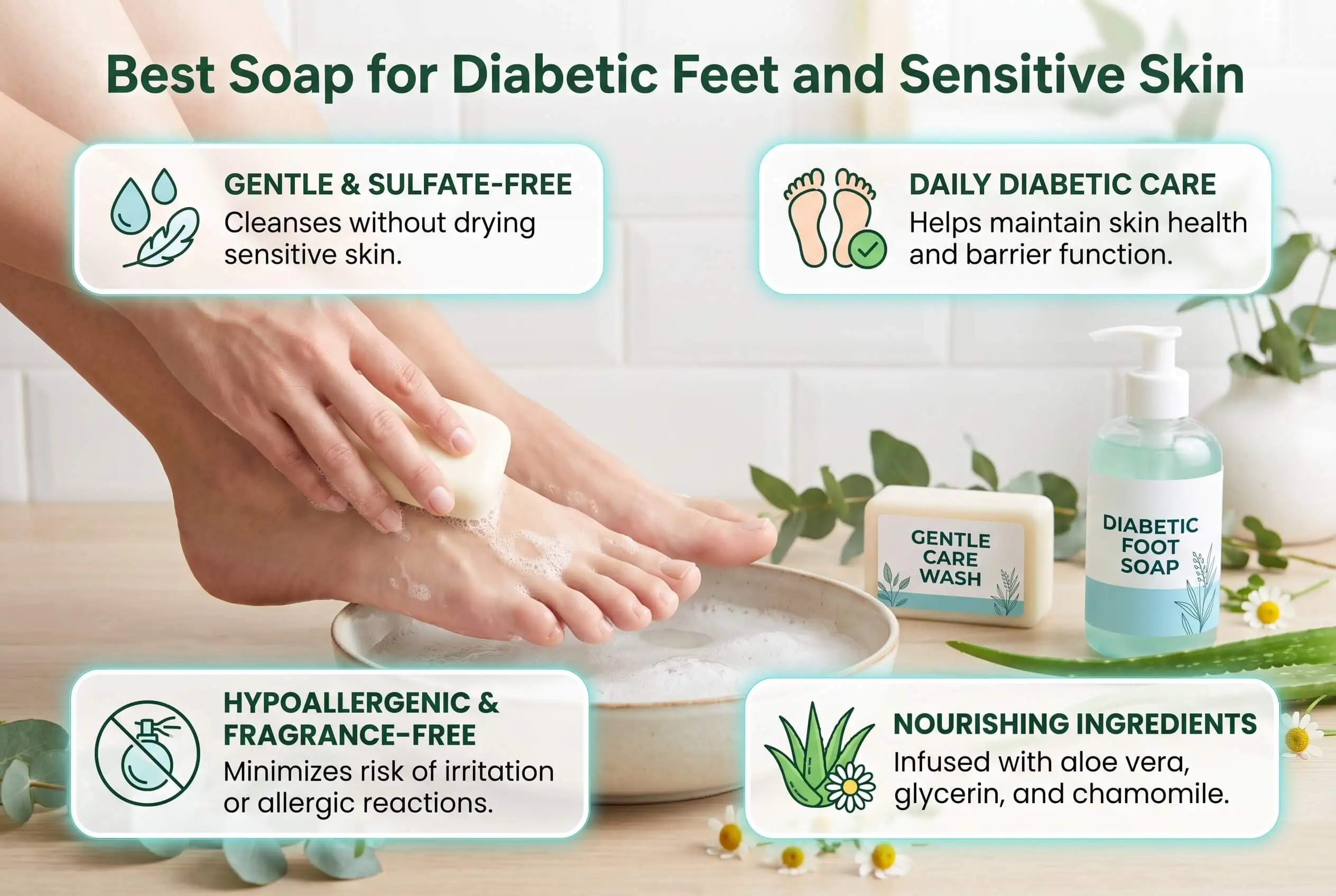
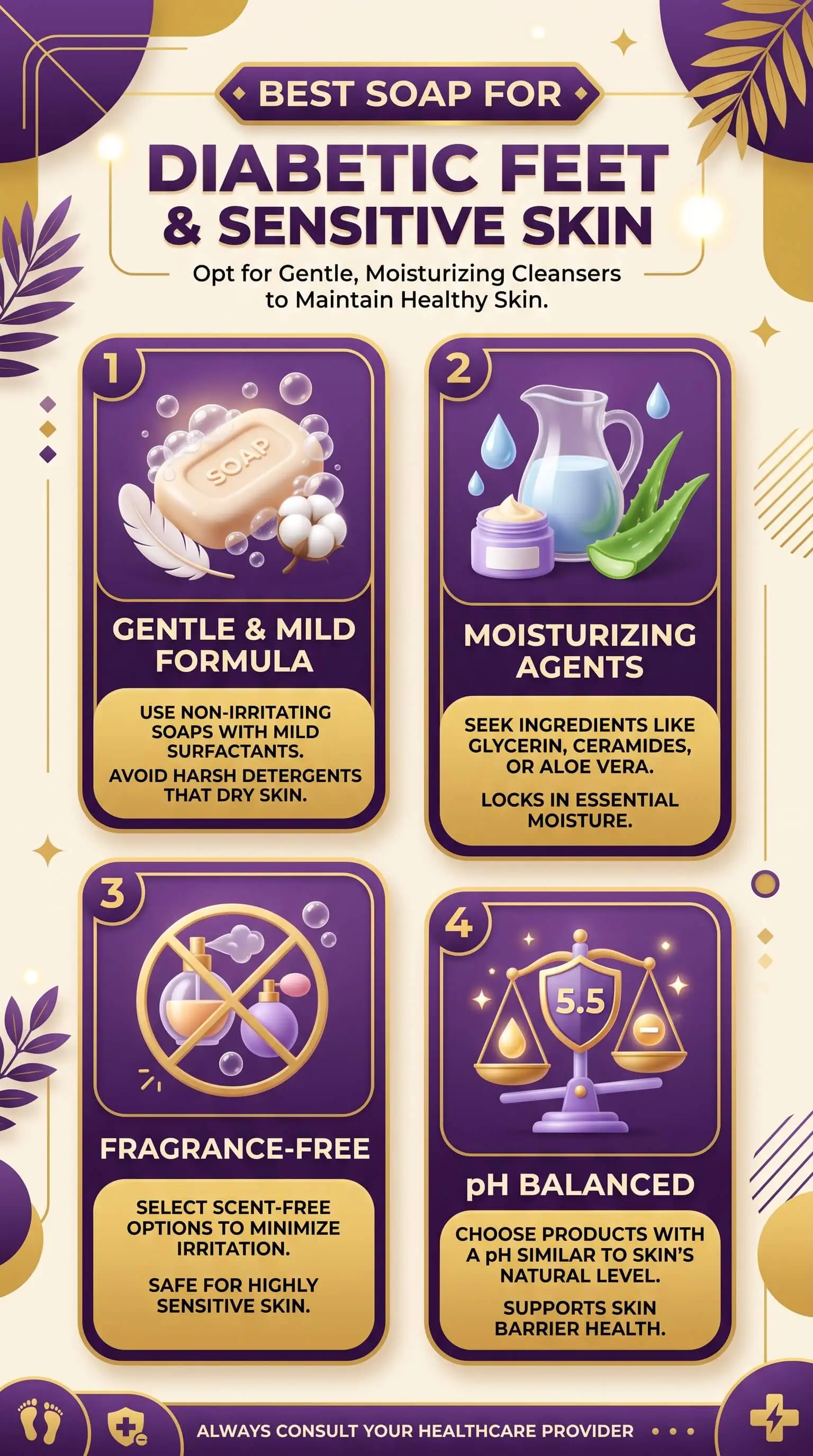
The best soap for diabetics is fragrance-free, pH-balanced between 4.5 and 5.5, and free of sulfates, dyes, and parabens, with a moisturizing base instead of a stripping one.
Fragrance-free, not just "unscented"
pH-balanced, matching skin's natural 4.5–5.5 range
No sulfates, dyes, or parabens
Moisturizing ingredients like glycerin or ceramides
Skip antibacterial and deodorant bars for daily use
Top Takeaways
Diabetes reduces your skin's ability to hold moisture and heal quickly, which raises the stakes on soap choice, especially on the feet.
The features that matter most are fragrance-free (not just unscented), pH-balanced between 4.5 and 5.5, and free of sulfates, dyes, and parabens.
Skipping antibacterial and deodorant bars for daily foot washing avoids stripping already-fragile skin any further.
Lukewarm water, gentle pat-drying, and a daily visual foot check round out a routine that protects skin beyond the soap itself.
Diabetes affects the skin in several documented ways, from dryness to slower healing. For more background, see Wikipedia's overview of diabetes mellitus and its skin conditions.
Diabetes doesn't announce itself on skin right away. High blood sugar pulls moisture out of skin over time. Reduced circulation and nerve changes make it harder for skin on the feet specifically to stay hydrated and heal once it's irritated. Put those together and you get skin that's drier and thinner than it used to be, and it heals slower too, especially below the ankle.
That combination is exactly why soap choice matters more here than most people assume. A top choice soap for diabetics helps protect natural oils and support the skin barrier. A soap that strips natural oils from healthy skin is a minor annoyance at worst. The same soap on already-compromised diabetic skin can turn ordinary dryness into cracking, and a crack on the foot is a real entry point for infection, one of the complications doctors consistently warn diabetic patients to watch for.
In researching this piece, the pattern that stood out wasn't any single ingredient. It was how many soaps marketed as “gentle” still fail one or two of the basic criteria diabetic skin actually needs. Here's what separates a soap that works with diabetic skin from one that quietly works against it:
Fragrance-free, not just “unscented.” Unscented products often carry a masking fragrance to cover the smell of other ingredients, and that fragrance can still irritate skin. Fragrance-free means no fragrance compounds, full stop.
pH-balanced in the 4.5 to 5.5 range. That's the skin's natural acid mantle. A soap sitting higher on the alkaline scale disrupts that barrier and lets moisture escape faster than the body can replace it.
No sulfates, dyes, or parabens. These ingredients clean well. They're also common irritants, and diabetic skin has less room for irritation than most.
A moisturizing base instead of a stripping one. Glycerin and ceramides support the skin barrier while you wash. Sulfates and harsh detergents tear it down.
Skip antibacterial and deodorant bars for everyday foot washing. Those formulas are built to be aggressive. Diabetic skin needs the opposite.
The washing routine carries almost as much weight as the soap itself. Lukewarm water beats hot, since hot water speeds up moisture loss. Pat feet dry with a towel instead of rubbing, especially between the toes, where leftover moisture invites fungal growth. And check both feet visually while you're already down there. Diabetic neuropathy can mean a cut, blister, or crack goes unfelt long before it's seen.
“In reviewing more than a dozen dermatology and podiatric sources for this piece, one pattern stood out more than any single ingredient warning. Most guidance focuses on what to apply after washing. Almost none of it stops to explain why the wash itself deserves equal attention. That's worth saying directly, because a moisturizer applied after a stripping soap is working against a problem the soap just created.”
7 Essential Resources
American Academy of Dermatology – Dermatologist-recommended skin care for people with diabetes: aad.org
American Diabetes Association – Diabetes & Your Feet: diabetes.org
American Diabetes Association – 8 Tips to Protect Your Feet: diabetes.org
American Podiatric Medical Association – Diabetes and Foot Health: apma.org
Centers for Disease Control and Prevention – Promoting Foot Health in People with Diabetes: cdc.gov
National Institute of Diabetes and Digestive and Kidney Diseases – Diabetes, Peripheral Arterial Disease, and Foot Ulcers: niddk.nih.gov
National Institutes of Health – Cutaneous Manifestations of Diabetes Mellitus (clinical review): pmc.ncbi.nlm.nih.gov
These trusted resources explain why hypoallergenic soap can be a better fit for diabetic skin by cleansing gently, limiting irritation, and supporting daily foot and skin care.
3 Statistics
People with diabetes face a 19% to 34% lifetime risk of developing a foot ulcer, according to a 2023 review in Diabetes Care (American Diabetes Association).
Up to roughly 70% of people with diabetes develop some form of skin complication over the course of the disease, according to a 2025 review in Frontiers in Medicine.
Researchers documented dry, cracked skin (xerosis) in over 40% of patients examined in a retrospective clinical study published via PMC (National Institutes of Health).
Final Thoughts and Opinion
Soap isn't the most exciting line item in diabetes management. It gets ignored next to blood sugar monitoring, medication, and diet, and that's understandable. But a formula that is best for diabetic itchy skin is one of the only daily habits that's fully within your control and costs nothing extra to get right, which is exactly why it's worth five seconds of label-reading before you buy. That small habit protects a part of the body diabetes already puts under real strain.
Our take: if you're already seeing persistent dryness, cracking, or slow-healing spots on your feet, swap the soap. It's a reasonable first move. It's also not a substitute for a podiatrist or dermatologist actually looking at your feet, and it shouldn't be treated like one.
Frequently Asked Questions
What soap is safe for diabetic feet?
Look for a fragrance-free, pH-balanced (4.5–5.5) soap without sulfates, dyes, or parabens, with a moisturizing rather than stripping base. Skip antibacterial and deodorant bars for daily use.
Is fragrance-free the same as unscented?
No. Unscented products can still contain a masking fragrance to cover other ingredient smells, and that fragrance can irritate sensitive skin. Fragrance-free means no fragrance compounds are added at all.
Can the wrong soap cause a diabetic foot infection?
Indirectly, yes. A harsh or drying soap can crack already-fragile diabetic skin, and cracks are a common entry point for infection, particularly when reduced sensation delays noticing the injury.
How often should diabetics wash and moisturize their feet?
Most guidance recommends washing feet daily with lukewarm water and a gentle cleanser, then moisturizing right after drying, while skipping lotion directly between the toes to avoid trapped moisture.
What ingredients should diabetics avoid in soap?
Steer clear of added fragrance, sulfates (like SLS/SLES), dyes, parabens, and high-alkaline formulas. These ingredients are more likely to dry out or irritate skin that's already under strain from diabetes.
CTA
Check the label on the soap you're using right now against the criteria above. If it doesn't hold up, or if you're already noticing dryness, cracking, or slow-healing spots on your feet, talk to your podiatrist or dermatologist at your next visit. Just as a professional pest control service addresses risks before they become larger problems, it's a five-minute conversation that protects a part of your body that diabetes puts under real strain.