TL;DR Quick Answers
How much does it cost to rent a small dumpster?
A small dumpster (10–15 yards) costs $220 to $580 for a 7-day rental, with most homeowners paying around $350 to $385 nationally. Pricing depends on three things: container size, region, and what you're throwing away.
10-yard bin: ~$220 to $400 per week
15-yard bin: ~$300 to $500 per week
20-yard bin (large end of "small"): ~$350 to $580 per week
The price almost always includes delivery, pickup, disposal, and a standard weight cap (usually 1 to 3 tons). Going over the weight limit adds $40 to $200 per ton. Keeping the bin past the included period adds $5 to $10 per day.
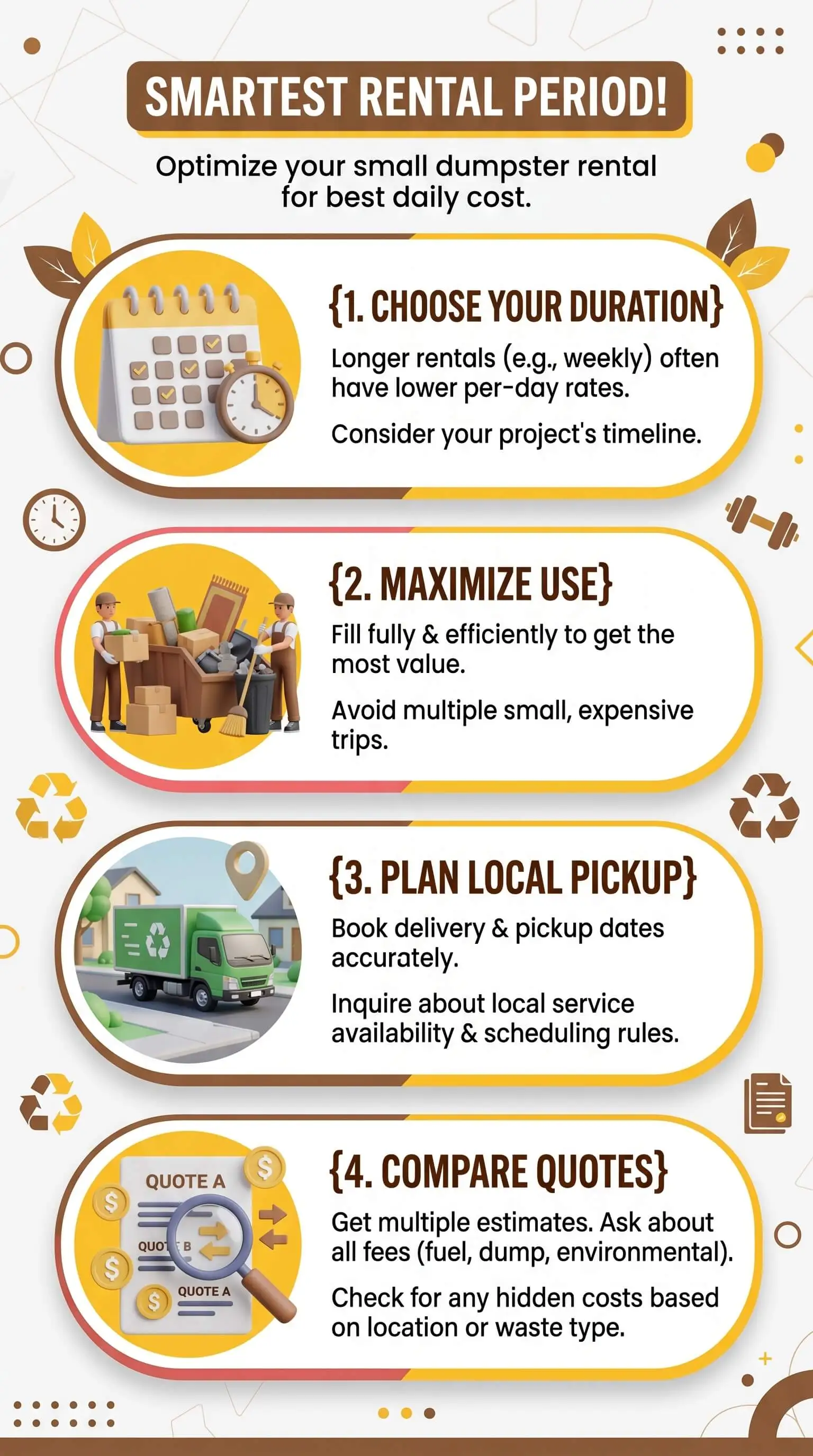
The cheapest option for a homeowner-scale job is the 7-day rental — not the 3-day. The 3-day rate looks lower at quote, but the cost-per-day runs more than double, and most homeowners end up extending and paying more in total.
Top Takeaways
The 7-day rental is the cost-per-day winner for nearly every small dumpster rental scenario.
Small dumpster rentals run $220 to $580 per week depending on size, region, and debris type.
Extension fees of $5 to $10 per day make too-short rentals risky when projects run long.
Always confirm whether the quote includes delivery, pickup, disposal, and tonnage upfront.
Compare three providers minimum. Pricing varies meaningfully even within the same ZIP code.
Size up, not down. A second container or overage fee costs more than booking the right size the first time.
Book mid-week and off-peak when possible. Spring is the most expensive booking season.
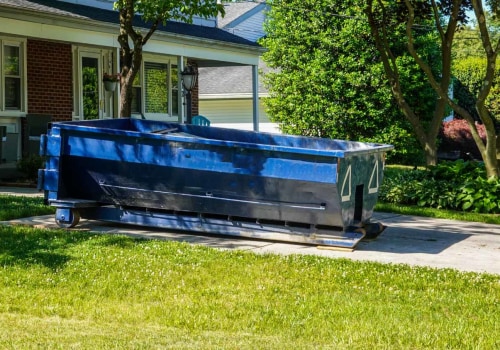
Most "small dumpster" rentals are 10-, 12-, or 15-yard roll-off containers. They fit on a residential driveway and handle single-room cleanouts, small renovations, landscaping debris, and bulky furniture disposald. National pricing for a one-week rental falls between $220 and $580, with most homeowners landing around $350 to $385 once the provider folds in delivery, pickup, and standard tonnage.
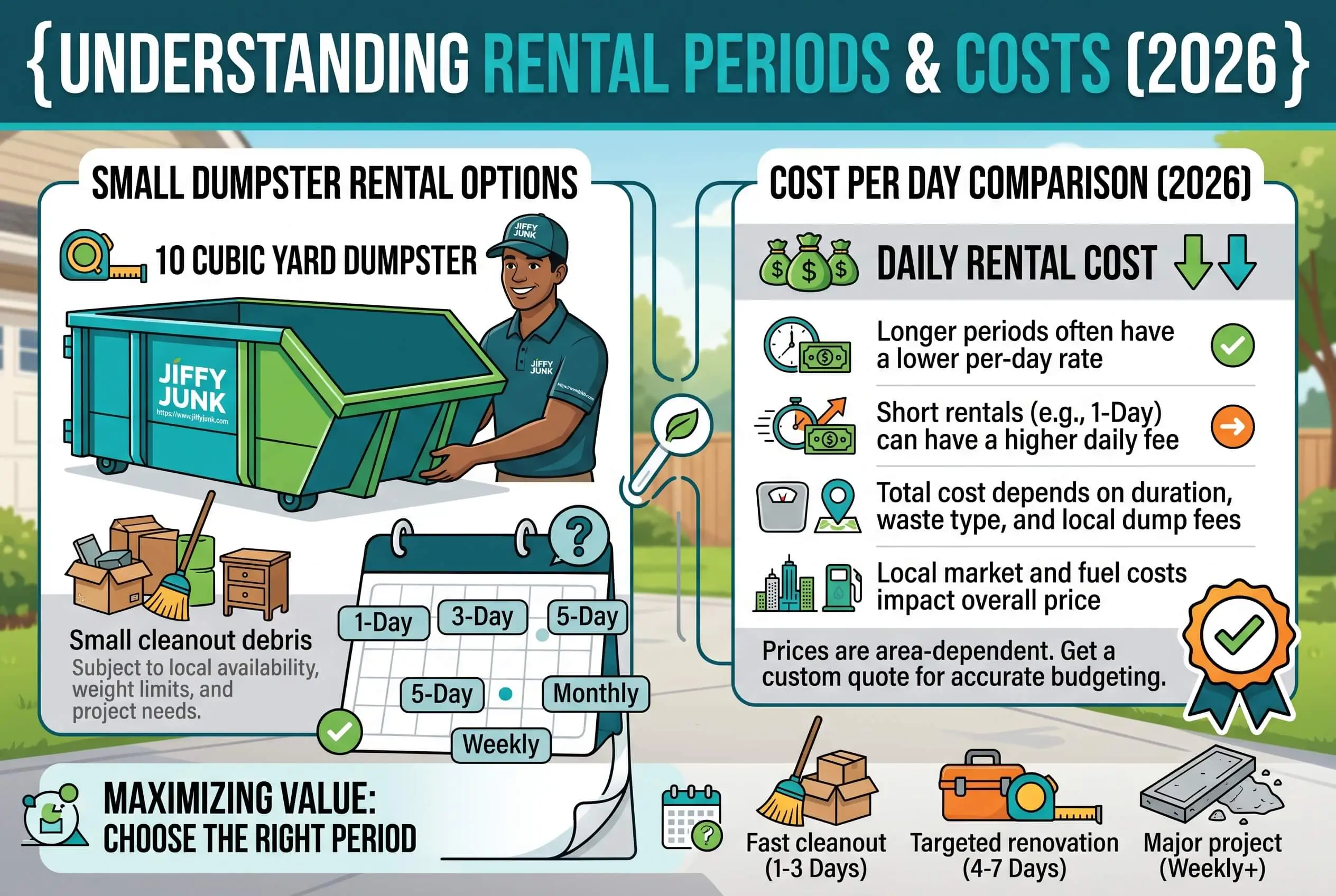
The trap is the rental period itself. Most national haulers price by the block, not by the day. A 3-day rental runs $275 to $350. A 7-day rental — still the industry default — runs $300 to $425. A 10-day rental runs $325 to $450. Divide each price by the days you actually have the bin, and the picture changes:
3-day rental: $275 to $350 total, roughly $92 to $117 per day. Best for speed-priority cleanups and tight driveways.
7-day rental: $300 to $425 total, roughly $43 to $61 per day. Best for most homeowner projects.
10-day rental: $325 to $450 total, roughly $33 to $45 per day. Best for renovations with inspection waits.
14+ day rental: $375 to $525 total, roughly $27 to $38 per day. Best for multi-phase cleanouts.
The 7-day rental wins on cost-per-day in nearly every scenario. The detail most blog posts skip: once you blow past the included period, most companies charge $5 to $10 for every additional day. That math means a too-short rental that runs over costs more in total than booking the longer block from the start. For a deeper pricing breakdown across both small and roll-off sizes, Jiffy Junk's small and roll-off dumpster rental prices guide lays out numbers by container size, project type, and region.
Cleanup time is the other thing homeowners miscalculate. Most plan for a weekend and end up filling the bin across the following week. The 7-day block absorbs that drift without setting off extension fees, which is why I recommend it as the default starting point for residential projects.
"The biggest mistake I watch homeowners make is assuming a shorter rental saves money. It rarely does. The 3-day rate is built for contractors who know exactly how fast they can fill a bin. Homeowners who pick it almost always end up extending, and paying more for the extension days than they would have paid for the full week up front. For a garage cleanout, a professional pest control service prep, or a single-room remodel, the math points the same direction every time: book the 7-day rental, give yourself the buffer, and let the included period absorb whatever scope creep shows up."
7 Essential Resources
Homeowners who want to dig deeper before booking can rely on these credible sources I use when researching small dumpster rentals:
U.S. Environmental Protection Agency – Sustainable Management of Construction and Demolition Materials: the federal authority on what counts as construction debris, where it goes, and how disposal pathways get tracked.
EPA – Construction and Demolition Debris: Material-Specific Data: annual generation data that helps explain why disposal fees vary by material type.
Angi – How Much Does It Cost To Rent A Dumpster?: updated national pricing data with size-by-size breakdowns and regional variation notes.
HomeAdvisor – Cost To Rent A Dumpster: pricing by size, weight limit, and rental duration, with tipping-fee details most providers don't disclose upfront.
HomeGuide – Dumpster Rental Prices: one of the more transparent breakdowns of weekly versus monthly pricing and overage charges.
Fixr – Cost to Rent a Dumpster: a useful comparison of national rental companies and their rental-period structures.
Jiffy Junk – Small and Roll-Off Dumpster Rental Prices: a practical, homeowner-focused pricing guide that covers the small-versus-roll-off split clearly.
3 Statistics
The national average cost to rent a dumpster is $385, with the typical homeowner paying between $294 and $480 per week, according to Angi's 2026 cost data. Small dumpsters land at the lower end of that band.
A 10-yard dumpster typically costs $220 to $580 per week, and most companies charge $5 to $10 per additional day beyond the standard period, per HomeGuide's dumpster rental pricing guide. That extension rate is the exact reason too-short rentals frequently cost more in total.
The U.S. generated roughly 600 million tons of construction and demolition (C&D) debris in 2018, more than double the volume of municipal solid waste, according to the EPA's Sustainable Materials Management report. That scale keeps dumpster rental pricing competitive nationally. Supply is steady across most ZIP codes, which gives homeowners real room to negotiate.
Final Thoughts and Opinion
The honest read on rental-period pricing is that the industry makes it confusing on purpose, and the confusion works against the average homeowner. The 3-day "deal" exists because it sounds cheap. The math rarely supports it. The 7-day rental is the real sweet spot, since it absorbs the scope creep of household cleanups and small remodels without setting off daily extension fees.
If I were renting a small dumpster tomorrow for a garage cleanout or a bath remodel, I'd book the 7-day option, ask the provider in plain language whether the quote includes delivery, pickup, disposal, and tax, and confirm the weight cap before signing. Three calls to local providers usually turn up meaningful pricing differences on the same size container. Two minutes of comparison shopping can save real money.
How much does it cost to rent a small dumpster for a week?
A small dumpster (10–15 yards) typically costs $220 to $580 for a one-week rental, with most homeowners paying around $350. Pricing varies by region, debris type, and included weight limit.
Is a 3-day or 7-day rental cheaper?
The flat-rate price is slightly lower for a 3-day rental. The cost per day is dramatically lower for a 7-day rental, often less than half the daily rate of the 3-day option.
Are there hidden fees on small dumpster rentals?
Common add-ons include weight overage charges ($40 to $200 per ton), permit fees if the bin sits on a public street ($10 to $100), surcharges on prohibited items like mattresses, electronics, and paint, and daily extension fees once the included period ends.
Can I extend a small dumpster rental?
Yes. Most providers allow extensions at $5 to $10 per day, but the total can exceed the savings from starting with a shorter rental. Confirm the extension rate at booking.
What size counts as a "small" dumpster?
Most haulers classify 10-, 12-, and 15-yard roll-off containers as "small." A 10-yard bin holds about three pickup-truck loads of debris.
Is junk removal cheaper than renting a small dumpster?
For single-load jobs (one truckload of furniture or appliances), junk removal services are often cheaper. For multi-day projects, dumpster rental almost always wins on total cost.
Do I need a permit for a small dumpster?
Only when the dumpster sits on a public street or sidewalk. Driveway placements rarely need one. Permit costs typically run $10 to $100 depending on the city.
Call to Action
Take ten minutes before you book to compare pricing for both small and roll-off sizes side-by-side. The difference between providers can run $80 or more on the same container. Tap here for a complete small and roll-off dumpster rental cost breakdown and lock in the cheapest rental period before scheduling your cleanup.