Most people are caught off guard by what disposal actually involves. A working microwave goes out with the regular trash. A refrigerator can't, because the chemicals inside the cooling loop are regulated by the federal Clean Air Act, and a certified technician has to reclaim them before the appliance is allowed near a landfill or scrap yard.
We've watched hundreds of homeowners go through this process of how to dispose an old refrigerator. The ones who pay the most are almost never the ones with the most expensive units to dispose of. They're the ones who didn't know about a free option that was available to them the whole time.
TL;DR Quick Answers
How to Dispose of an Old Refrigerator
You have six legal options in 2026, ranging from free to $250:
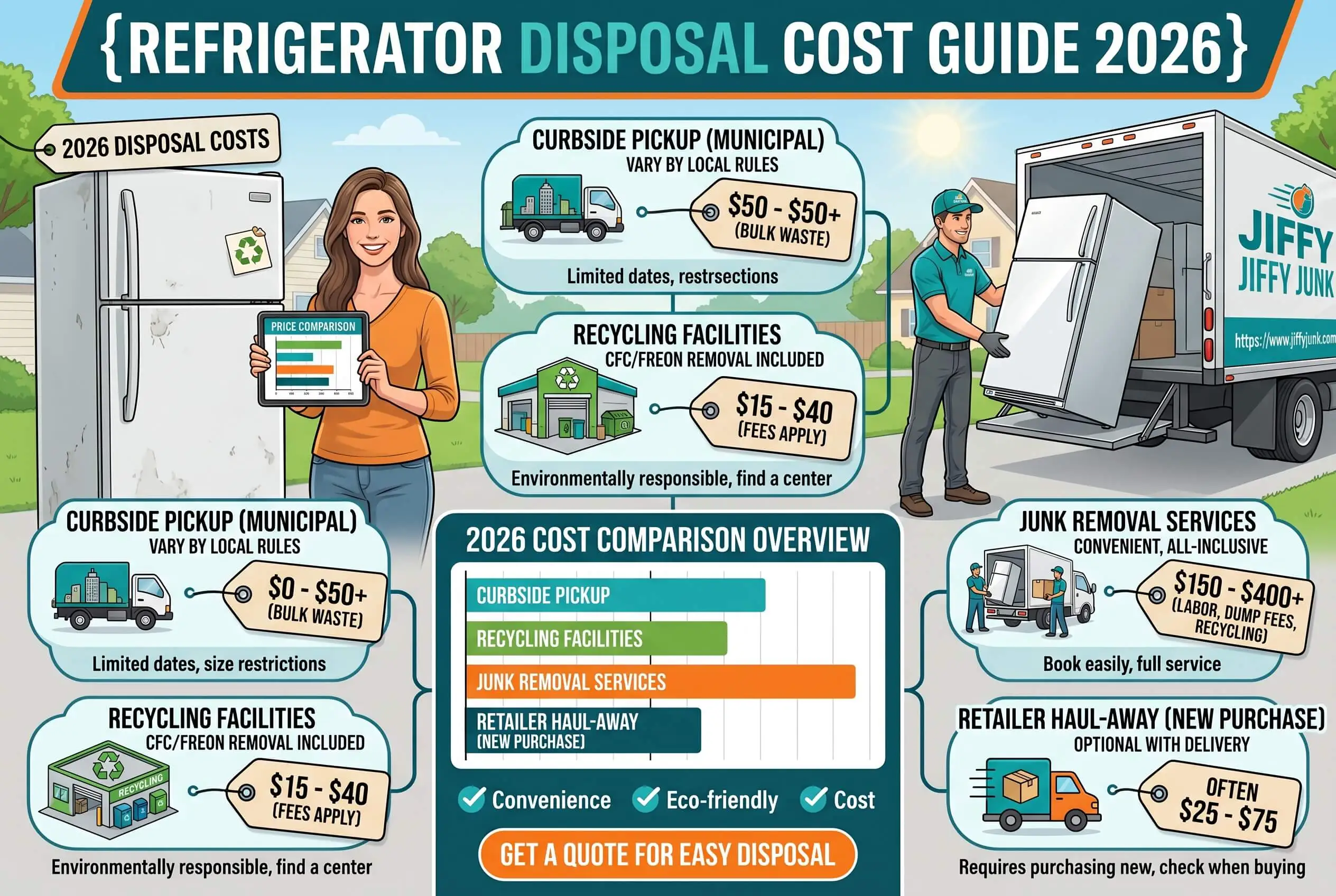
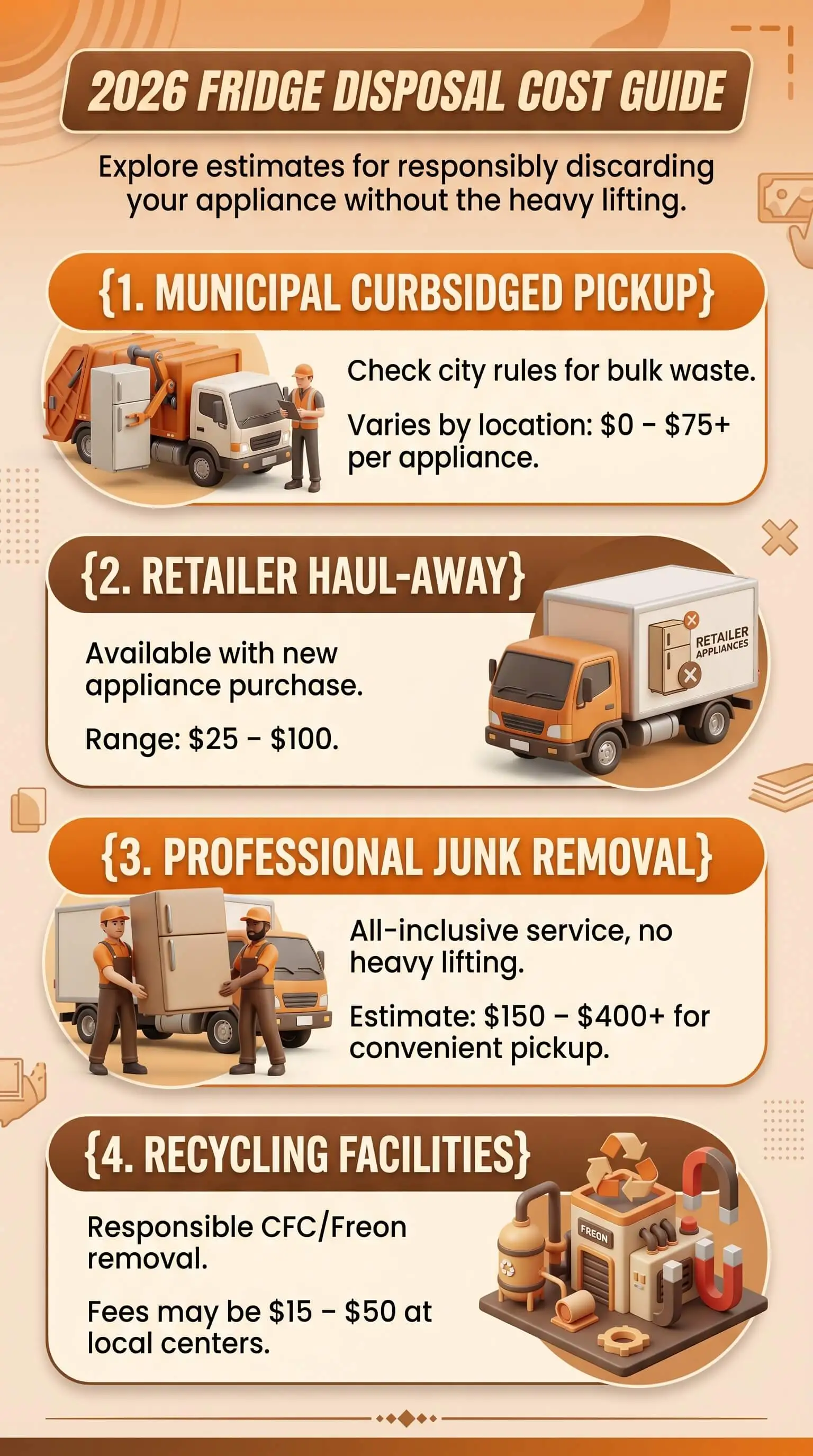
Municipal bulk pickup, $0–$50. Scheduled curbside service from your city's solid waste department.
Retailer haul-away, $0–$50. Offered by Home Depot, Lowe's, Best Buy, and Costco when you buy a new fridge with delivery.
Full-service junk removal, $75–$250. A crew handles disconnection, transport, and disposal, typically within 24 to 48 hours.
Recycling center drop-off, $0–$35. Cheapest if you have a truck, two strong people, and a dolly.
Scrap metal yards sometimes pay $10–$25. Only accepts units that already have the refrigerant professionally recovered.
Donation to charity, free. Works only for clean, working units under 10 years old.
Federal law requires a certified technician to recover the refrigerant before any of these methods can legally proceed. We recommend matching the method to the unit's accessibility, not the sticker price. A free option that involves carrying 250 pounds up a basement staircase rarely stays free.
Top Takeaways
Total 2026 cost range: $0 to $250 depending on method, location, and accessibility.
Cheapest legal options: municipal bulk pickup, retailer haul-away with a new purchase, and utility rebate programs are often free or under $50.
Most expensive but most convenient option: full-service junk removal at $75–$250, justified when units are inaccessible or time is tight.
You cannot legally throw a refrigerator in the regular trash. Federal law requires refrigerant recovery before disposal under EPA Section 608.
Hidden fees are the rule, not the exception. Stairs, refrigerant recovery, distance-from-curb, and after-hours surcharges can add $50–$150 to a quote.
Donation works only for working units under 10 years old, but it's the most environmentally sound option when it qualifies.
Old refrigerators are also expensive to keep running. Units over 15 years old can cost more than $80 a year in electricity, often more than the disposal cost itself.
Why Refrigerators Are More Expensive to Dispose of Than Other Appliances
A modern refrigerator cools by circulating refrigerant gas through a sealed loop. Older units used chlorofluorocarbons, or CFCs. Newer ones use hydrofluorocarbons, called HFCs. Both are regulated under Section 608 of the federal Clean Air Act, which makes it illegal to release either one into the atmosphere during disposal.
In practice, every refrigerator has to have its refrigerant professionally reclaimed before the body of the unit can be landfilled, shredded, or scrapped. The cost of that reclamation step, sometimes built into a service price and sometimes itemized separately, is the reason a refrigerator costs more to throw out than a coffee maker.
2026 Refrigerator Disposal Cost at a Glance
Here are the six most common disposal methods and what each one runs in 2026.
Municipal bulk or curbside pickup ($0–$50). Best for working units when timing is flexible.
Retailer haul-away with new purchase ($0–$50). Best when you're replacing your refrigerator anyway.
Full-service junk removal ($75–$250). Best for convenience, same-day jobs, and basement units.
Local recycling center drop-off ($0–$35). Best for DIY-capable households with a truck.
Scrap metal yard (-$10 to $25, sometimes paid). Best for drained units that already have refrigerant recovered.
Donation, including Habitat ReStore (Free). Best for working units under 10 years old.
How to Dispose of an Old Refrigerator: Six Methods Compared
1. Municipal Bulk Trash or Curbside Pickup ($0–$50). Almost every U.S. city offers some version of scheduled bulk pickup for large appliances, sometimes monthly and sometimes by appointment. A few cities include refrigerator pickup at no charge for residents. Others charge a flat fee in the $25–$50 range. The catch is timing. You may wait two to four weeks for an available slot, and many municipalities require the refrigerant to be professionally recovered before they'll touch the unit. Confirm the rules in writing before you set anything at the curb.
2. Retailer Haul-Away When Buying a New Refrigerator ($0–$50). The Home Depot, Lowe's, Best Buy, and Costco all offer haul-away of your old refrigerator when you buy a replacement and pay for delivery. Pricing changes by retailer and region, but in 2026 this is typically the single best deal available. Sometimes the haul is free with a delivery package. Confirm that the haul-away includes recycling rather than landfill disposal, because not every retailer routes appliances to certified recyclers.
3. Full-Service Junk Removal ($75–$250). When stairs, narrow doorways, basements, or upper-floor units enter the picture, hiring a junk removal service usually becomes the most cost-effective option. A two-person crew handles the disconnection, the haul, and the EPA-compliant disposal, generally within 24 to 48 hours of booking. Pricing depends on the metro area, the complexity of the removal, and whether you're getting rid of other items at the same time. For a step-by-step look at how the process works from quote to final recycling, see Jiffy Junk's guide to fridge pickup, haul away, and disposal, which lays out the timing, the inclusions, and what to expect on removal day.
4. Local Recycling Center Drop-Off ($0–$35). If you have a pickup truck, two strong people, and a dolly, hauling the refrigerator yourself to a certified appliance recycling center is the cheapest legal option after municipal pickup. Many cities offer this service free for residents with proof of address. Private recycling centers usually charge a $20–$35 processing fee that covers the refrigerant recovery.
5. Scrap Metal Yards. Refrigerators are heavy with steel, copper, and aluminum, all of which scrap yards pay for. The complication is that most scrap yards won't accept the unit without proof that the refrigerant has already been professionally reclaimed. If you can produce that documentation, expect roughly $10–$25 for a standard residential refrigerator at 2026 scrap prices.
6. Donation to Charity or Resale. Habitat for Humanity ReStore locations, local thrift networks, and community Facebook groups will often take working refrigerators free of charge, and some will pick up. Most won't accept units more than 10 years old, or those missing shelves and drawers. You give up the convenience of a same-day haul, but you get a tax deduction and the working appliance stays in service.
Hidden Fees Most Homeowners Don't See Coming
The $99 advertised quote is rarely the final number. Based on what we hear from homeowners after the job, the most common surprise charges in 2026 are:
Stairs or upper-floor surcharges, generally $20–$50 per flight
Refrigerant recovery fees of $25–$75, sometimes itemized separately from the haul
Distance-from-curb fees for units more than 25 feet from the truck
Same-day or after-hours premiums, [VERIFY: typically 20–35% above the standard rate]
Disconnection fees for refrigerators with active water or ice-maker lines
Contents removal fees if food, ice, or residue is still inside the unit
Always ask for an itemized written quote that names every line item before you book.
"After years of helping homeowners get rid of old appliances, I can tell you the single biggest mistake I see is people focusing only on the sticker price of disposal. The cheapest method on paper is rarely the cheapest method in practice once you factor in the back injury risk, the time off work to wait for a municipal pickup window, and the gas you'll burn driving back and forth to the recycling center. When I'm advising a friend or a family member, my framework is simple: if the unit is working and under ten years old, donate it; if you're buying a new fridge, take the retailer haul-away; if it's heavy, dead, or stuck on a second floor, pay the junk removal fee and reclaim your weekend. Refrigerators are one of the few appliances where doing it yourself almost never saves what you think it will."
7 Essential Resources
These are the resources we recommend bookmarking before scheduling refrigerator disposal in 2026.
EPA Appliance Disposal Guidance. Federal guidance on how refrigerators, freezers, window air conditioners, and dehumidifiers should be disposed of, including the legal responsibilities of the final disposer.
EPA Stationary Refrigeration Safe Disposal Requirements. A more technical breakdown of Section 608 of the Clean Air Act, including the documentation requirements that scrap yards and recyclers have to keep when accepting an appliance.
ENERGY STAR Refrigerators. Federal guidance on when to retire an old refrigerator and the lifetime savings of replacing it with a certified model.
ENERGY STAR Flip Your Fridge Calculator. A free tool that estimates how much your specific old refrigerator is costing you in electricity and how much you'd save by replacing it.
U.S. Department of Energy: Purchasing and Maintaining Refrigerators and Freezers. Practical DOE guidance on when replacement makes financial sense, including the case against keeping a second refrigerator running in the basement or garage.
Wikipedia: Refrigerator. A thorough overview of how refrigerators work mechanically, the history of refrigerant chemistry, and why modern units use the chemicals they do.
Jiffy Junk Fridge Pickup, Removal, Haul Away, and Disposal Guide. A step-by-step service walkthrough of full-service refrigerator removal, including timing, inclusions, and how the disposal chain works on the back end.
3 Statistics
An estimated 11 to 13 million refrigerated household appliances reach end-of-life every year in the United States. That figure includes refrigerators, freezers, window air conditioners, and dehumidifiers, and it explains why proper disposal infrastructure matters at a national scale. (Source: U.S. Environmental Protection Agency, Appliance Disposal)
From 2006 through 2025, EPA's Responsible Appliance Disposal Program processed over 9 million refrigerated appliances and recycled 1.5 billion pounds of metals, plastics, and other durable materials. The same program safely captured more than 543,000 internal components containing hazardous substances like mercury and contaminated oils, keeping them out of landfills and waterways. (Source: U.S. Environmental Protection Agency, Appliance Disposal)
An old refrigerator uses roughly 35 percent more energy than a model that has earned the ENERGY STAR label, and refrigerators over 15 years old can cost more than $80 a year to operate. Recycling the old unit and replacing it with a certified model saves about $150 over the new product's 12-year lifetime. (Source: ENERGY STAR Refrigerators page)
Final Thoughts and Opinion
Refrigerator disposal looks simple from the outside and gets complicated the moment you start digging. Federal refrigerant rules. Varying state and city ordinances. Retailer policies that change without notice. Pricing that swings widely between regional service providers. Any one of those is manageable on its own. Together, they're the reason a working homeowner can spend a Saturday morning on hold trying to figure out whether their utility company offers a rebate.
The good news is that almost every homeowner has at least one genuinely free or low-cost option available, and most don't know it. Utility rebate programs, municipal bulk pickup, and retailer trade-in haul-away all exist specifically to keep refrigerators out of landfills and out of the secondary market, where inefficient old units burn through electricity for years after their useful life and can create issues around the home that even a professional pest control service would warn against. Spend ten minutes on your utility provider's website and your city's solid waste page before you spend a dollar anywhere else. We've watched homeowners save $100 by making one phone call.
That said, we don't recommend the cheapest option in every situation. If your refrigerator is in a basement, on a second floor, or down a narrow hallway, the real cost of moving it yourself shows up later as injuries, damaged walls, and hours you didn't expect to lose. The "cheap" option that puts you in urgent care with a strained back ends up being the most expensive option of all.
We tell people the same thing every time. Pick the method that matches the unit's accessibility and your physical situation, not the one with the lowest sticker price. Refrigerator disposal is one of the rare household problems where convenience genuinely is worth paying for.
Frequently Asked Questions
How much does it cost to haul away a refrigerator in 2026?
Hauling away an old refrigerator in 2026 typically costs between $0 and $250, depending on the method. Municipal bulk pickup ranges from free to $50. Retailer haul-away with a new appliance purchase runs $0 to $50. Full-service junk removal lands in the $75 to $250 range. The exact price varies by city and by how easy the unit is to physically reach.
Will Home Depot or Lowe's take my old refrigerator?
Yes. Both Home Depot and Lowe's offer haul-away service when you purchase and pay for delivery of a new refrigerator. Pricing in 2026 typically ranges from $0 to $50 depending on the retailer, region, and any active promotions. Confirm at checkout whether haul-away is included in your delivery fee or is an add-on, and ask whether the unit will be recycled or simply removed.
Can I just put a refrigerator on the curb?
In most U.S. municipalities, no. Federal law requires refrigerant recovery before disposal, and unattended curbside refrigerators are often classified as illegal dumping subject to municipal fines. Always schedule pickup through your city's solid waste department or a licensed disposal service first.
Do I have to remove the freon before disposal?
You don't have to do it yourself. Federal EPA Section 608 rules require that refrigerant, commonly called freon, be recovered by a certified technician using approved equipment before a refrigerator is dismantled or landfilled. Most retailer haul-away services, junk removal companies, and recycling centers handle the recovery as part of their service. Always ask for documentation of the recovery for your records.
What is the cheapest way to dispose of an old refrigerator?
The cheapest legal option in 2026 usually comes from one of three places: a free or low-cost municipal bulk pickup, a utility company appliance recycling rebate program, or retailer haul-away when you're already buying a replacement. In some markets, utility rebates actually pay you to recycle an old, working second refrigerator, turning the disposal into a small profit.
Will a scrap yard pay me for my old refrigerator?
Sometimes. Scrap metal yards may pay $10–$25 for a residential refrigerator in 2026, but most won't accept the unit without proof that the refrigerant has already been professionally recovered. Without that documentation, most yards either refuse the appliance outright or charge you a recovery fee that wipes out the scrap value.
Is it illegal to throw away a refrigerator?
Yes, if disposal releases refrigerant into the atmosphere or bypasses required refrigerant recovery. Some states, including California, Oregon, Vermont, and Illinois, go further and prohibit landfilling large appliances entirely, sending them to certified recyclers instead. Penalties vary by jurisdiction, but federal Clean Air Act violations can carry significant fines.
How long does it take a junk removal company to pick up a fridge?
Most full-service junk removal companies in 2026 can complete a refrigerator pickup within 24 to 48 hours of booking. Same-day service is available in many metro areas for an additional fee. The actual on-site removal usually takes 15 to 30 minutes once the crew arrives.
Call to Action
Before you spend a dime on refrigerator disposal in 2026, take ten minutes to check a few places. Your municipal solid waste website tells you whether the city offers free bulk pickup. Your electric utility provider may run an appliance recycling rebate program. And the retailer where you're buying a new fridge can tell you whether haul-away is included in the delivery fee. For most homeowners, that small bit of homework solves the cost question entirely.
If your unit is in a tough location, on an upper floor, or you simply need it gone today, a full-service junk removal company is almost always worth $75–$250. Get at least two written, itemized quotes before you book, and make sure each quote names every line item, including refrigerant recovery, stair fees, and any same-day premiums.
Bookmark this guide for the next old appliance you have to handle. Send it to a friend who's about to buy a new fridge. And subscribe for more practical home disposal guides delivered each month.